Looking for a Free Adobe Premiere Alternative? Meet Olive Video Editor!
My fellow pro and hobbyist video editors and geeks, our prayers have been heard!
Do you ever find yourself needing to simply edit a couple of clips together, regardless of their format? Maybe you want to add a soundtrack, a title or two along the way. Or perhaps do some basic color correction or time warping on the source material?
Here's how it usually goes: you get an idea, either write it down or jump straight into your NLE and get ready to bring it to life.
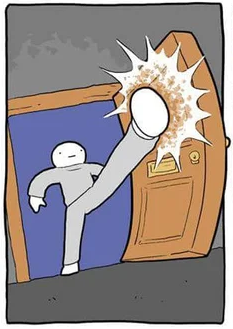
But first, you need a full-fledged video editing app on the computer you're using. But even if you have one installed — say, you open up Premiere, Final Cut, or DaVinci Resolve — you'll quickly realize that professional NLEs are picky about the video formats they accept. Then you discover you need to transcode clips and re-save images in different formats...
Now you're questioning that sudden wave of euphoria. You look for reasons not to keep going, and finally...
Nope. Not worth it. I'm outta here!
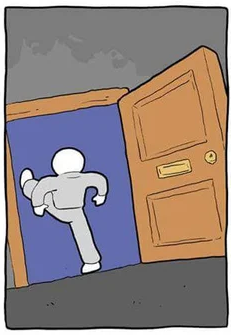
And that, my friends, is exactly how ideas DIE...
Quietly... In the corners of your mind... Overtaken by a barrage of complications and tedious procedures needed before you can actually work on that damn clip.
The Main Difference Between a Normal User and a Power User
Yesterday I stumbled upon a couple of quotes in an article, where the author tried to give succinct and generalized definitions to the terms a lot of people throw around in their everyday lives.
Those are "normal users" and "power users".
I loved his take on this topic so much that I decided to adapt them into English and share them here (the original article was in another language).
Behold:
Normal users have goals. They achieve those goals. But sometimes they need to expand their abilities to do so.
Power users act the other way around: they expand their abilities so that future goals fit within them.
I strongly believe these don't just describe "computer users" and "geeks", but fit any area of the "real world" as well, be it construction, civil engineering, woodworking, sports — you name it.
They all follow similar principles:
One user has just the basic tools and knowledge and only wishes to learn and expand the inventory whenever necessary to reach the goals. Whereas the other one has a garage full of power tools, gear and materials and extensive knowledge built up not just while chasing those goals, but from genuine interest in the field (like a hobby or a job you really, really enjoy and want to stay several steps ahead of). That way they can tackle problems with confidence instead of feeling "helpless" or out of their depth.
Both approaches are viable and it all comes down to preference and life experience.
So yeah...

Which one of those would you be?
Short and Sweet Ring Fit Adventure Review, Some Nintendo Switch Notes, and What the Hell Happened to Unity Engine!?
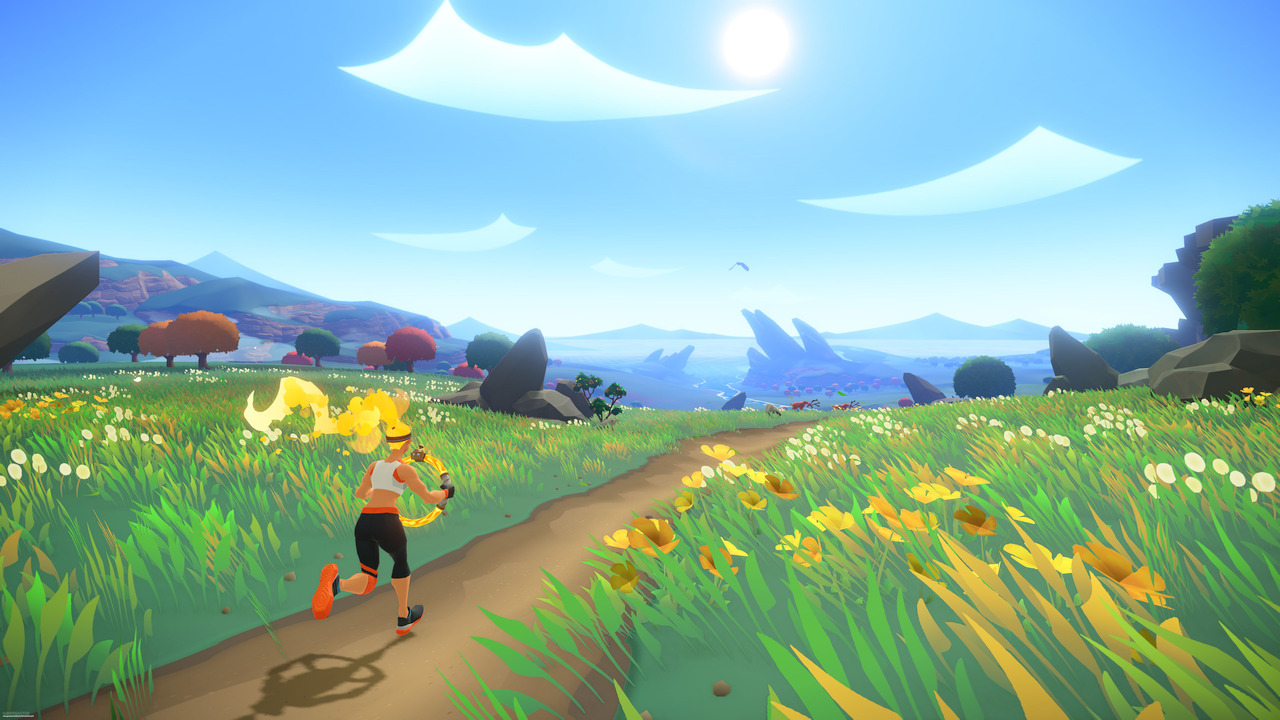
When I mentioned I was working on a design document for a third-person semi-open-world game to a good friend of mine several months ago, he immediately asked me whether I had played The Legend of Zelda: Breath of the Wild or Super Mario Odyssey. Naturally, not being a Nintendo Switch owner, I had no such experience. "Get the console!" — he replied immediately — "You gotta check out what those Zelda and Mario games have to offer in the way of game mechanics and overall flow."
"Yeah, right..." was my instant reply — "Getting an overpriced piece of hardware powered by a microwave-grade Tegra X1 SoC with games that cost a fortune each? I'll pass."
And with that, I returned to working on the DD and various side projects and forgot the conversation ever happened.
🎮 Click/tap here to skip my Unity rant and go straight to the Ring Fit Adventure review.
The pitiful state of the Unity game engine
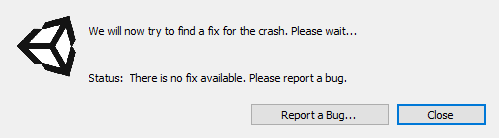
By mid-February, the DD was about 70% done and I considered installing a brand-new version of the Unity Engine to start prototyping the basic ideas. I might dedicate a whole post to what I had to go through trying to install and use the latest version of the Unity Editor, but will keep it short for now:
Change of Course and a New Beginning
An overwhelming majority of my readers (a whopping 2 out of 3!) have been noticing that the latest string of posts didn't really fit the primary "CGI" nature of the blog. True, I mostly touched upon marketing (something I deal with at work these days) and some down-to-earth topics which held particular importance to me personally. Some might even go so far as to blame me for procrastinating rather than working on the short film.

That's... actually pretty close to ground truth, as you'll soon find out, and it's something I need to finally admit, however embarrassing that may seem.
This is a long post that starts slow, takes a dark turn, raises serious questions, but ultimately changes gears and sets everything right, with some cool stuff and a look at the industry through an amateur's eyes along the way, as usual.
So get yourself a glass of some sparkling beverage and a couple of snacks, and let's roll.
How It All Began
In 2016, I started this blog as a means of documenting the everlasting journey into the world of computer graphics. Luckily, I didn't go unprepared: with a fair amount of experience in video production, editing, 2D VFX and compositing plus a basic understanding of the most important aspects of 3D, plus a released mobile game project in the portfolio, I was armed with just enough tools and knowledge to challenge myself further.
That "further" somehow turned into an animated short film project I've been working on ever since.

Parmezan cheese SSS and shadow
Can your glorified path-tracer replicate this crunchy, flaky, perfectly aged Parmesan cheese in all of its subsurface-scattery glory?

Relentless Consumption Does Not a Human Make
In the following video Paul shines a light on the issue of the overall collapse of the Western society. If you're not afraid to see the truth and feel like there's more to life than binge-drinking, uncontrolled sexual promiscuity and relentless consumerism, please do check it out and share with those you care about.
Consumerism does not arm one with a profound meaning of existence. Hard work turned humans from crap-flinging apes into what is now called Homo Sapiens Sapiens (no typo there, it's actually double "Sapiens").
The times when people really had to work hard like their ancestors to provide even the basic needs for themselves and their kin are pretty much over. Which means more free time on our hands. Free time is a resource our forbears could only dream about, but the one many of us take for granted and turn to waste. The roturier and degenerate manners are not only prevalent but also promoted by media, corporations and "advertised" in the form of our peers burning their lives in a hopeless search for meaning in the trash-bin of unending consumption.
And with automation taking over more and more areas of labor, this trend will only continue and probably end in a disgraceful global-scale fiasco of the voracious modern consumerist culture.
Behold the Homo Sapiens Sapiens: