Time flies...
Hard to believe it’s been 5 whole years since I published my in-depth Ring Fit Adventure review, bringing my tenure with the game to six years total. If you haven't read that article — give it a quick skim, as it’ll help you make sense of the Ring Fit terminology I use here. All this time, that review has been sitting comfortably in my top three most popular blog posts, so it definitely deserves a follow-up.
In the original piece, I praised the game for everything from its mechanics to its effectiveness. But did it actually pass the test of time, or is it that I ultimately lost interest, became a functional adult, and finally grew a mandatory beer belly?
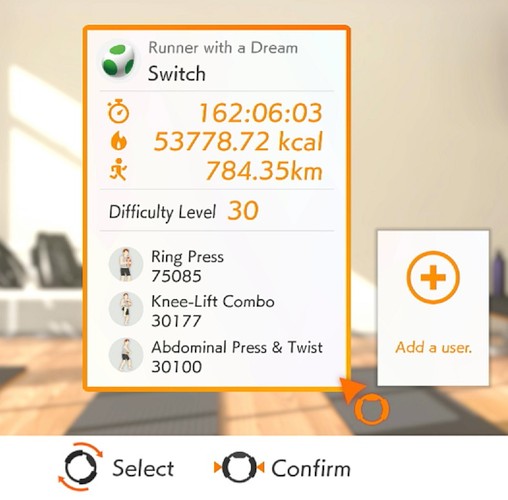
The "RFA Mindset"
As I mentioned at the end of the previous post:
There's no "end game" to fitness, it's something you make a part of your life.
That's exactly what it has become for me — what I do, and want to do. If I go more than two days without RFA, I get this unrelenting urge to jump right in for a workout or two. It's not even about guilt or anything like that. Skipping my workouts for too long just feels… off. I spend a large chunk of my day at a computer, which is effectively like sitting on my ass for hours on end. Occasional walking or chores can’t really compensate for that, so I need that extra aerobic kick to stay in shape, especially when the weather is too hostile for jogging or cycling.
Even more so, it's about my state of mind. I can confidently say that over the past few years I've been more productive than ever. Aside from the professional side of things where growth is expected, I’ve tackled personal goals too: shooting and editing gigabytes of photos and videos, working on a healthy lifestyle coaching program and writing for the blog, where I hit a legendary milestone by finishing and publishing a giant article on the Tcl/Tk toolkit.
Bottom line is, when you do something often enough, it becomes habitual. That’s just how it works. It's up to you to try and stick to the activities that cultivate good habits. Ring Fit Adventure isn't a magic be-all, end-all tool, but it's a solid start if you need that extra push to prioritize your health. If you're struggling to make aerobic workouts become a staple in your life, gamification might very well be the missing piece to the puzzle.
The Ring Controller — It. Just. Won't. Break!
Even after doing Ring Fit Adventure workouts 2–3 times a week for 6 freaking years, the Ring-Con I got with my first copy of the game is still intact and perfectly functional!
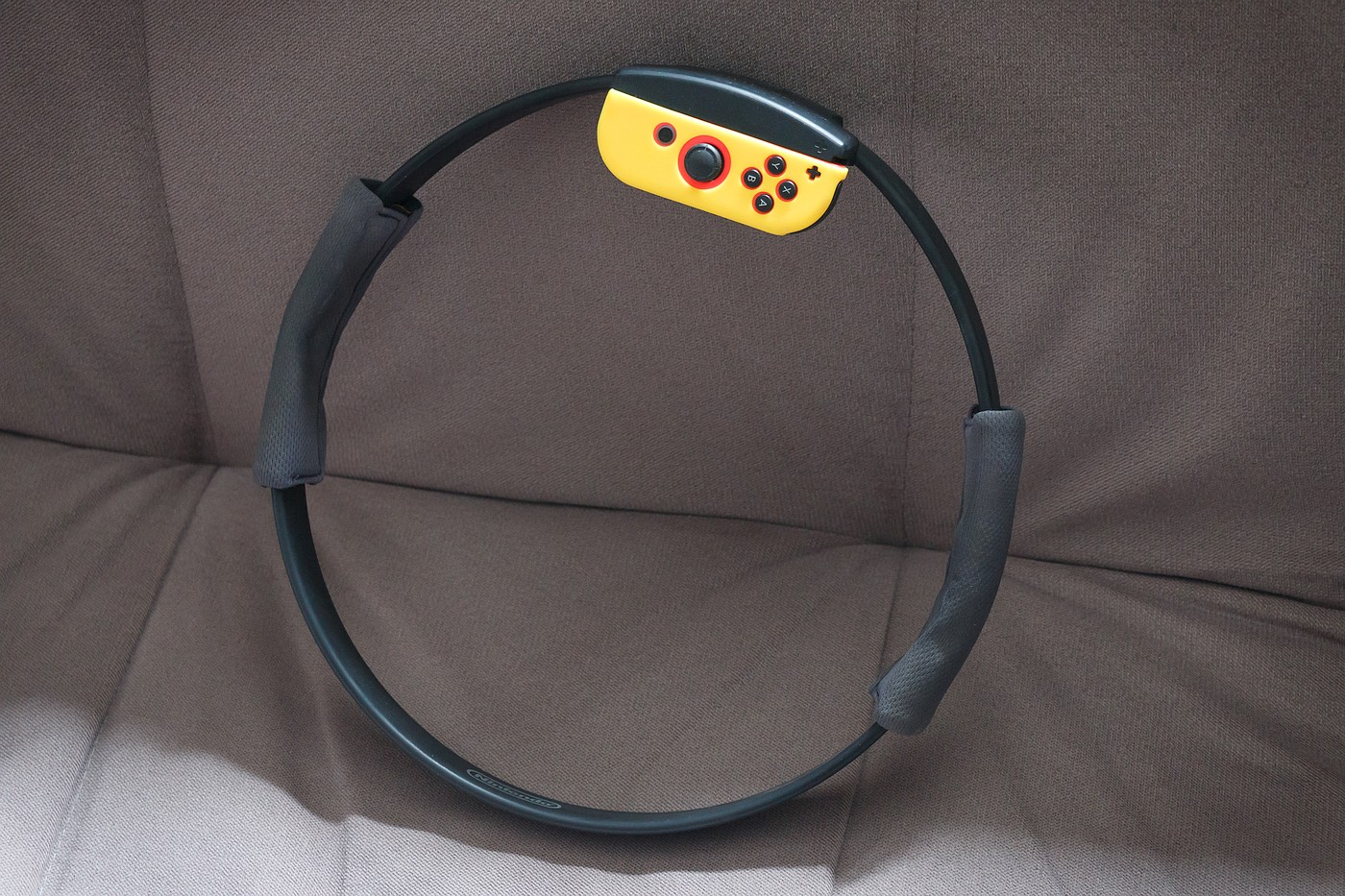
The controller is not creaking, dropping inputs or whatever. Aside from the terribly worn-out soft grips, begging to be replaced, you can't tell it's been in use for so long.
I really should replace them...
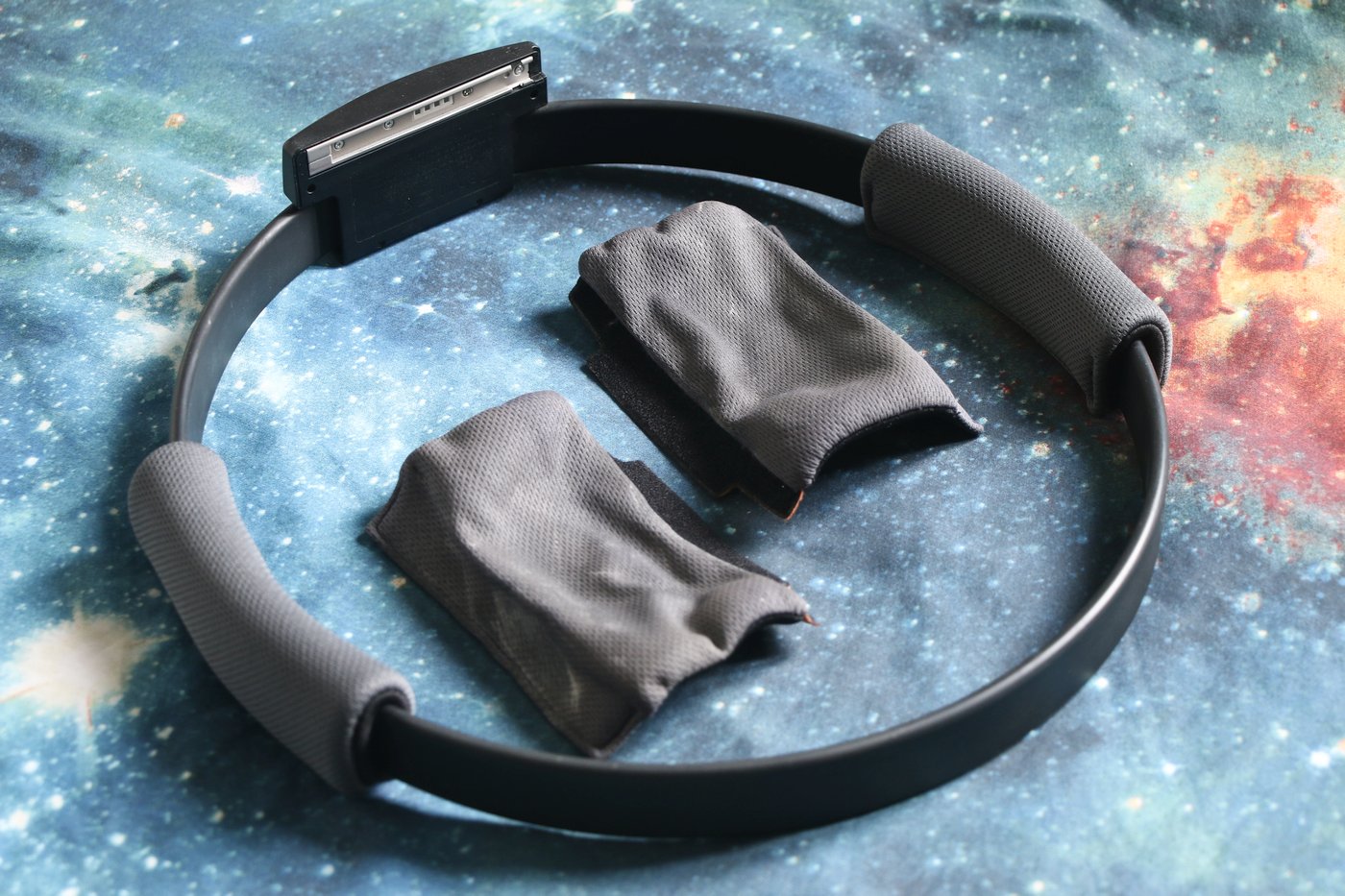
There. Good as new.
Soon after acquiring my first original copy of the game, I purchased two more retail boxes as backups, and none of them have seen any use since then. What an astounding piece of hardware. At some point I just had to look up how the Ring Controller is engineered and built, and found a good video which explained why the device is so durable. At this point, I almost want it to fail just to have a good excuse for a disassembly.
I should also mention that my Switch unit — the OG HAC-001 manufactured in 2017 — is also effectively brand new.
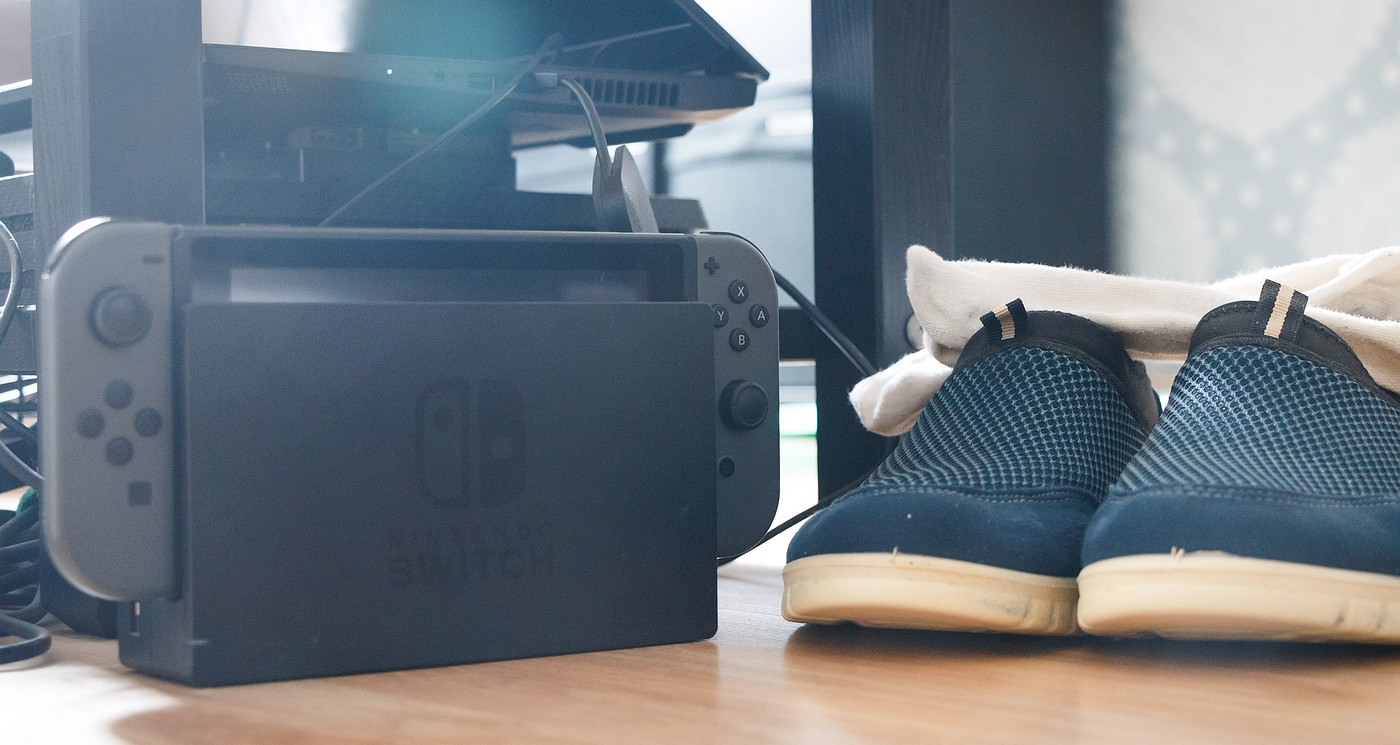
The console doesn't overheat under load, doesn't crash or reboot. Even the battery holds a decent amount of charge, definitely over half of its original capacity. The point is — if you're after Ring Fit Adventure in particular, instead of purchasing the new, terribly overpriced Switch 2 model, just go for a used Switch 1 (not the Lite version, as it doesn't support HDMI video out). It's cheap, will last for years, and supports thousands of games. The money saved could be then spent on a pair of spare Joy-Cons for a more comfortable RFA experience, ensuring a charged set of controllers is always available.
The Results
Alas, no beer belly to be admired yet.
There's no going around it — you want to see "the goods". Whatever I showed in the original post would be irrelevant (and the remainder of this post — meaningless) if I were to become a walking McDonald's mascot in the mean-time.
Luckily, that's not the case:
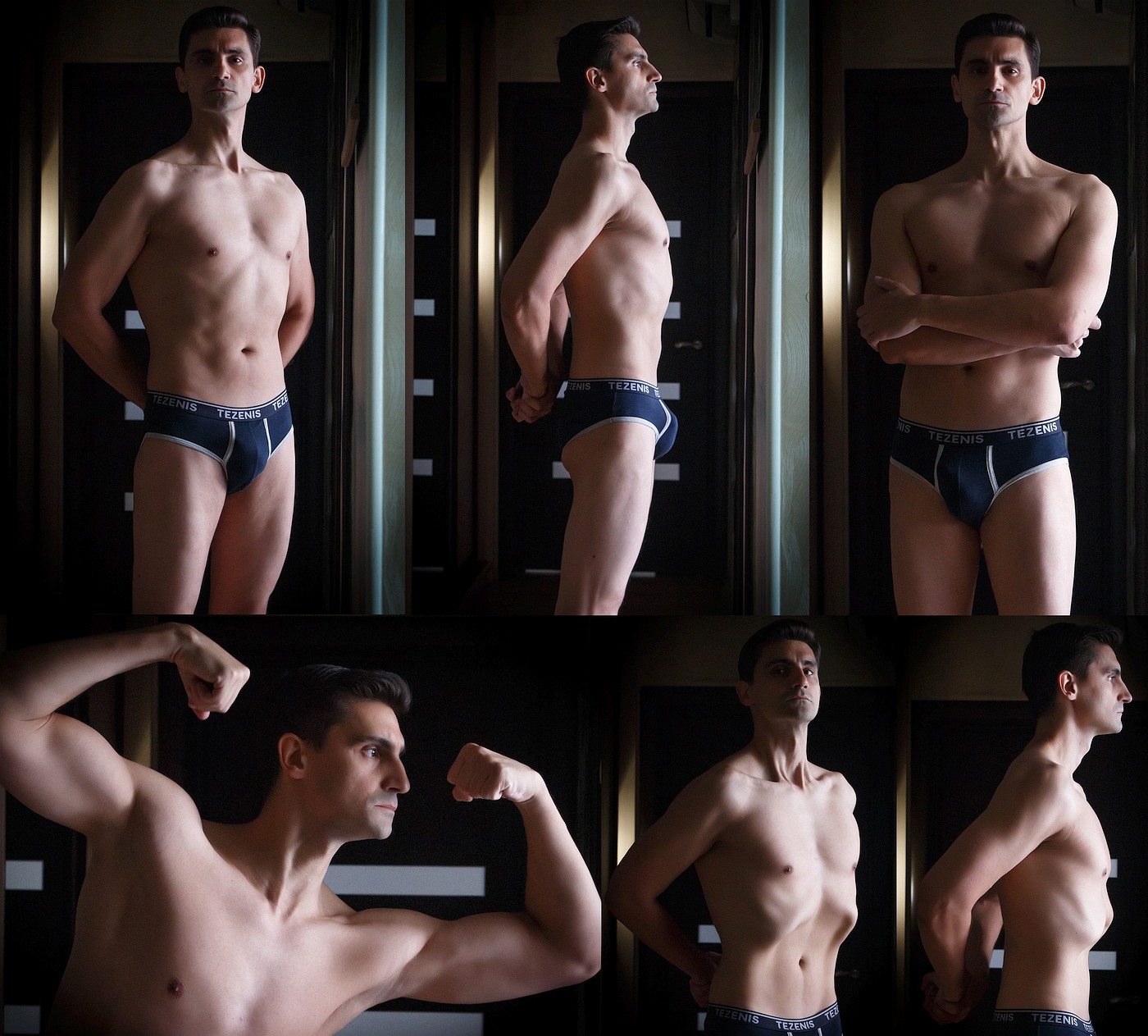
I'd say this is reasonable for a 40-year old lean guy. At 185 cm tall and weighing under 79 kg (6'1" and 174 lbs respectively), the body feels exceptionally agile and energetic. As shown in the collage, I can do a respectable abdominal vacuum, with a waist circumference of just 74cm (29"). Not quite what Steve Reeves was capable of, but still, is does showcase good control over the transversus abdominis. And, yes, the bicep pose is lowkey an homage to UMK3.
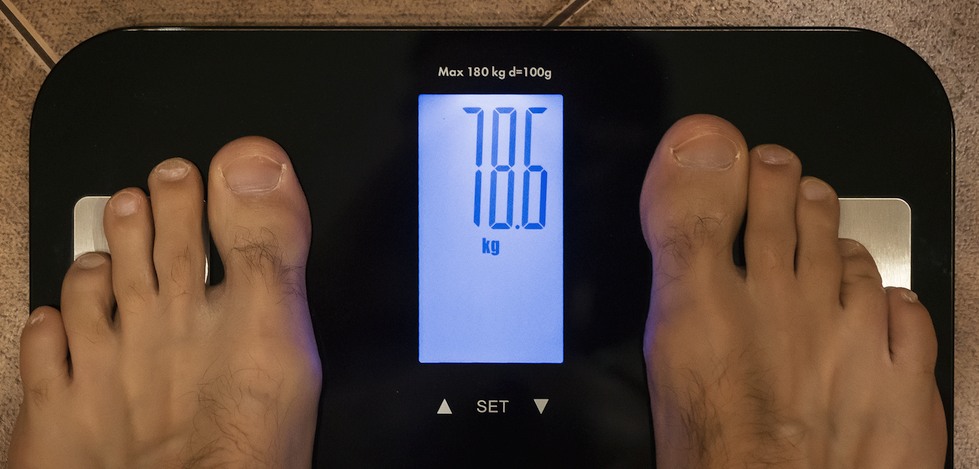
You can probably imagine how I feel with a body like that:
Pretty good.
Let's dissect how this was achieved and sustained without any peptides, SARMs, diuretics, GLP-1s and other PEDs, or even supplements like whey/casein protein, BCAAs and the like.
Resistance Training Is Paramount
Over time, I organically developed a certain rhythm with Ring Fit Adventure by sticking to a steady 2–3 aerobic sessions a week for a couple of years. However, I eventually realized that this alone wasn't enough. While great for the heart, aerobics lack the resistance needed to truly challenge the muscles and promote a healthy body composition — one where the body prioritizes lean muscle mass over fat storage.
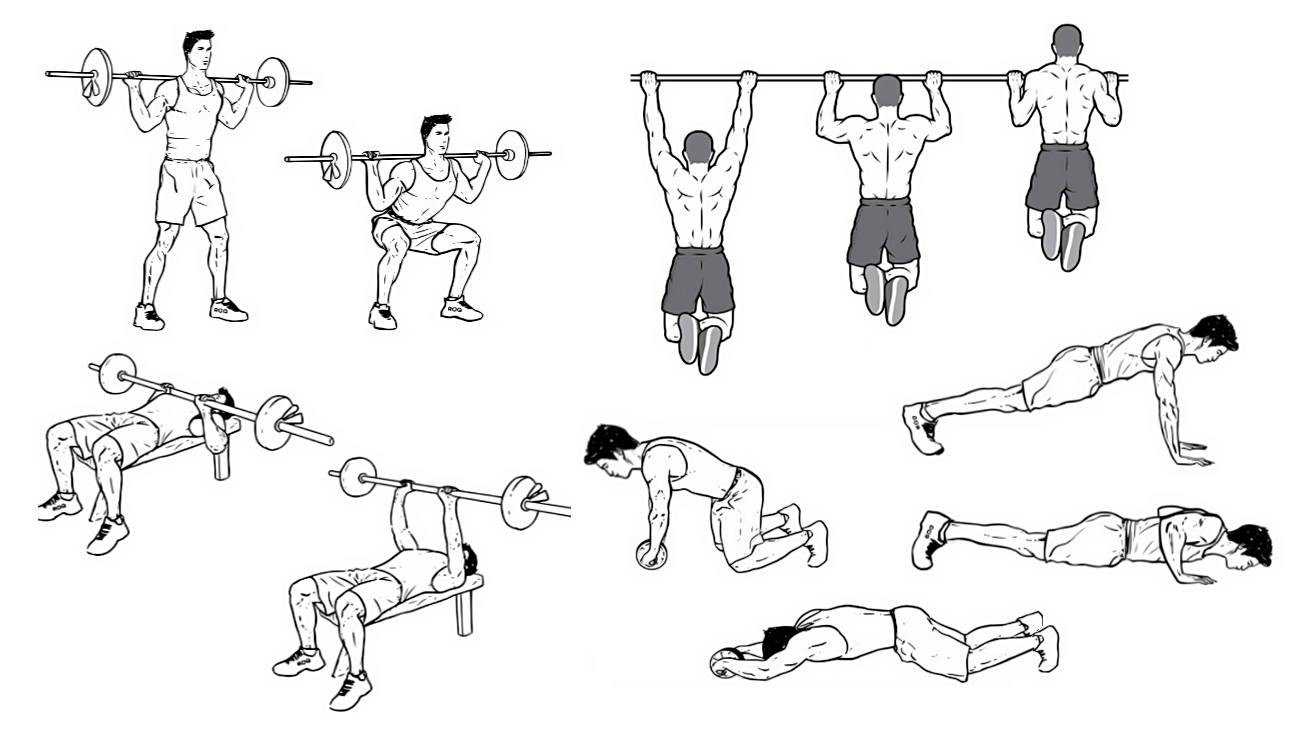
Of course, I did do my resistance (or strength) exercises from time to time, but there was no rhyme or reason to them. I did them whenever "I felt like it", leading to me slacking off, naturally. As soon as I set up a schedule and stuck to it, the results were quick to follow. So here's my advice:
Incorporate regular strength training into your active lifestyle!
Resistance training is the ultimate driver of body recomposition. By complementing your aerobics with resistance training where you do your reps until failure, you'll signal to the body that the muscles are both in constant demand and need increased reinforcement. It triggers the hormonal responses necessary to tell your body to keep the muscle and burn the stored energy, rather than just "lose weight" without any regard to what you're losing — the valuable lean muscle mass or disposable fat. All of this culminating in a much "better-proportioned" body that is capable of not only running fast, but also actually performing heavy-duty work: lifting and moving weights, or handling any high-intensity task that requires more than just a good pair of lungs.
Once I got my act together and introduced regular strength-focused workouts, the results were immediate. Beyond a simple confidence boost, I felt a new sense of physical ability: my posture improved, and tasks that used to feel heavy now felt effortless, which was even noticeable while doing casual day-to-day stuff like chores. Seeing measurable progress in my pull-ups and push-ups, for instance, provided a tangible metric for my growth that cardio alone could never offer.
As for the gear I use — it's the most old-school set-up you'll ever see:
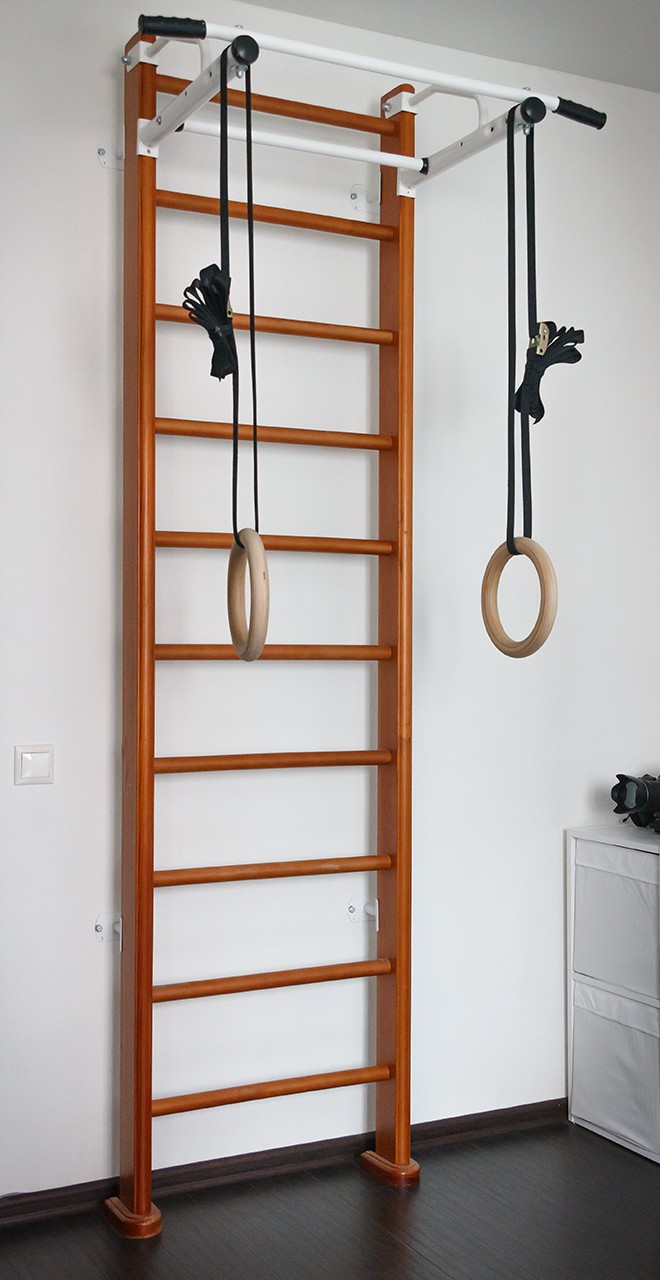
Yep, the good old "Swedish Wall" with some gymnastic accessories:
- The Pull-Up Bar — for building raw upper-body and grip strength, essential for posture and to avoid "desk-jockey" shoulders, or a "text neck" — that permanent forward-leaning head position caused by staring down at phones for years. Children and teens are especially susceptible, but adults can also develop this condition after years of peering into their phones, leading to chronic strain and poor posture. So the pull-up bar is my personal saving grace
- The Rings — my go-to for unstable, high-tension exercises like dips, and the gold standard of calisthenics — L-sit Chin-ups, which are an absolute "ego check." By keeping my legs at a 90-degree angle, I’m hitting the biceps and core with the kind of high-tension, static intensity you’d see from an Olympic gymnast. I deadass can do this, fr fr!
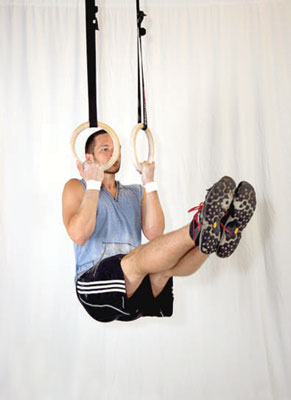
- The Stall Bars — excellent for core reinforcement, spinal decompression (hanging), and precise stretching. And general monkeying around, of course!
With this I have a whole "gym-on-a-wall" and can modulate the difficulty of my workouts by varying my body’s leverage and angle of attack, the tempo of my reps and the duration of my static holds. I strongly believe this is still the optimal setup for someone who wants maximum results with a minuscule footprint while avoiding the dreaded, crowded, stinky public gym.
"Breaking a Plateau"
Sometimes though, cardio and resistance training aren't enough. While they help "direct" the body's efforts and build the foundation, they don't magically vaporize fat. You can't "out-train" a bad diet, or cheat physics in general. It's a math problem that no amount of L-sit Chin-ups can solve.
This year, shortly after winter, I found myself struggling to burn off those stubborn love handles. Fasting helped, of course, but after maintaining a certain weight for more than three months, my body had established a new "set point": it had spent so much effort building up those fat stores that it wasn't about to give them up without a fight.
To break this plateau, the options were simple: fast more often (and for longer), or move significantly more. While the former is the sensible approach, it wasn't working very well because the body would scream for food when tapping into the fat reserves, sabotaging my fasting efforts. I couldn't extend my fasting window any further without ravenous hunger kicking in and tanking my productivity! So I turned to the latter option in hopes to push through this plateau, as well as see just how far I could push myself.
What followed was a day to remember.
For reference: Ring Fit Adventure keeps track of the total activity timer for one day, resetting it every 24 hours. Considering that sleep is kind of important, you would have less than 16 hours to set a record if you were to attempt it.
And, well, by spreading my workouts over 4 sessions, 5 workout sets each, I was able to go though all of my 20 custom workout programs in a single day, while setting a new record of 4 hours 24 minutes of activity timer. Since the RFA activity timer ticks only during movement, the total floor time was clocked at about 7 hours.
I decided to commemorate this personal best with a groovy video for my YouTube channel. You'll find the workouts I went through that day at the end of the vid. Feel free to reference this clip to get ideas for Ring Fit workout programs of your own:
⚠️ [Photosensitivity Warning]: This video contains flashing lights ⚠️
That was a true athletic marathon, and I don't recommend it! You should only attempt this if nothing else works, as a drastic psychological and physical "circuit-breaker", or unless you have something to prove to yourself.
Thankfully, there's a third, much more sensible option — to combine Intermittent Fasting with a specific type of a workout called:
High Intensity Interval Training
"High Intensity" in High Intensity Interval Training is not about running a marathon or working your ass off for 45 minutes straight until your legs and arms give out. Doing something like that would actually lead to increased wear and tear on the joints, resulting in longer recovery periods and even injuries.
Instead, with HIIT you perform a short series of explosive, maximum-effort bursts (usually under a minute each) until you hit your limit. You then take a brief rest just long enough for your heart rate to drop before diving right back into the "red zone". It’s a cycle of controlled exhaustion that shocks your metabolism into gear and promotes cardiovascular adaptations. Such a workout typically consists of 4–6 bursts, shouldn't last longer than 15 minutes total, and ideally would result in cyclical heart-rate changes, compared to a traditional, prolonged Low Intensity Steady State workout:
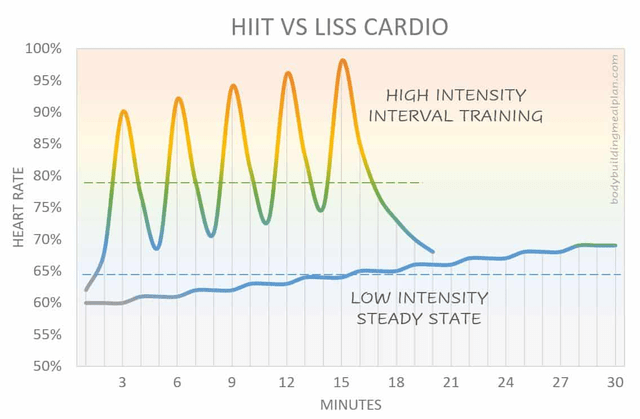
It's a heart-rate roller-coaster that peaks higher with every interval, until you're completely exhausted. Health organizations increasingly cite HIIT as the most efficient form of cardiovascular conditioning available. Here are some of the benefits:
- Boosts growth hormone — human growth hormone has positive effects on health and longevity by promoting muscle growth and a better body composition. GH is key to rapid yet controlled weight loss that leads to a well-proportioned, lean and strong body (as long as it's produced by the body and not injected externally)
- Boosts BDNF production — Brain-Derived Neurotrophic Factor literally causes the brain to grow new synapses, helping to delay the onset of neurodegenerative diseases like Alzheimer's and slowing down brain aging
- Improves circulation — well, duh, your heart and blood vessels have to work harder than usual, training your entire cardiovascular system to move more fuel with less effort by increasing the efficiency of mitochondria in the cells. This is called mitochondrial biogenesis, which increases the density and power of your cellular engines. So unlike the low-intensity "steady state" cardio, HIIT demands a cellular upgrade
- Strong "afterburn" effect — it may seem counter-intuitive, but doing more intense exercises in a shorter amount of time leads to a longer period of fat burning afterwards. So you work out less and stay in the fat burn zone for longer, how cool is that?
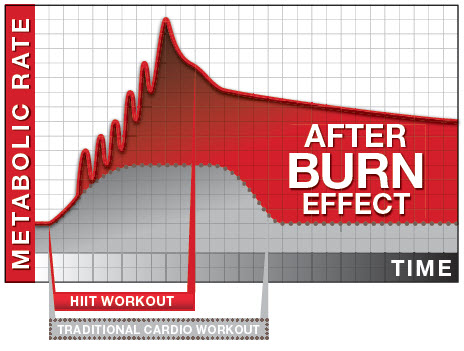
Note how I didn't mention the types of movement you do during HIIT. If you can make your heart-rate increase in a short amount of time, anything goes. You can do burpees, mountain climbers, high-knees, explosive squats — with a correct technique, and if your body can take it, the type of activity is secondary as long as you follow the HIIT principle of a heart-rate roller-coaster.
With the freedom to pick any exercise that could help raise heart-rate in seconds, I built a custom HIIT-inspired workout in Ring Fit Adventure. This way I can "switch my brain off" and let the machine tell me what to do, while I focus on the movement. The principle is the same:
Rest => burst => rest => burst => rest => burst…
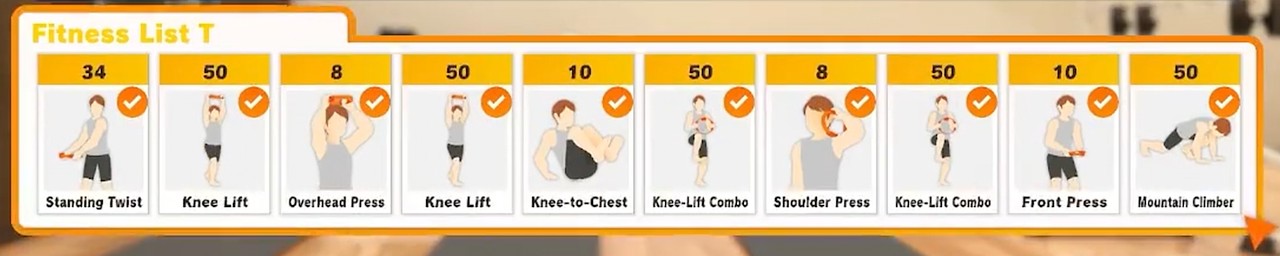
Performing 1 to 3 HIIT sessions per week is enough to maintain or progress cardiovascular gains, provided they are separated by at least 48 hours of recovery. Extended recovery is mandatory because HIIT places systemic stress on the entire body, greatly taxing the central nervous system.
EXTRA! Case Study: Blood Pressure Monitoring, Fasting, Cardiovascular Health and Coffee
Cardiovascular health is a huge topic on its own, and my claims about HIIT being good for it needed to be put to the test. So, that's exactly what I did. Head over to the new blog post dedicated to this very topic to find out how it went.
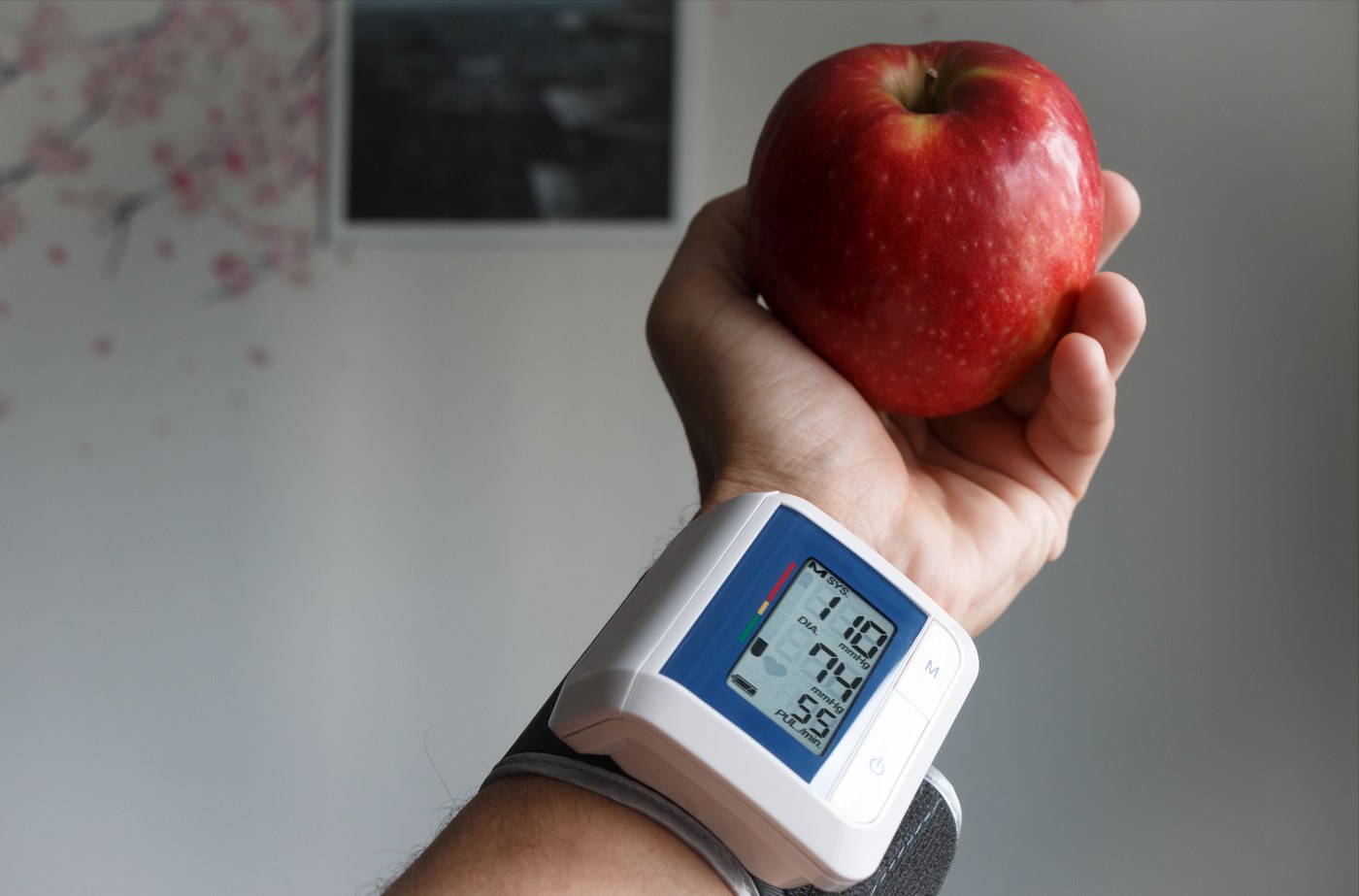
Long story short: by pushing the system to its limit for just a brief moment, the body responds by opening the floodgates and keeping the entire arterial network relaxed for a huge chunk of the day. If you want to keep your heart and blood vessels young, the most effective way to do it is to give them that extended, low-workload breathing room. I'm not even mentioning the "VO2 Max" improvements you get — let this be something you discover on your own.
HIIT "By The Numbers"
Of course you don't need to have RFA to do HIIT. Simply get a heart-rate monitoring device to measure your metrics during your own HIIT routine.
Here's a graph of my heart-rate for the duration of two custom workout routines: a low-intensity, warm-up "A" followed by the HIIT-like "T":
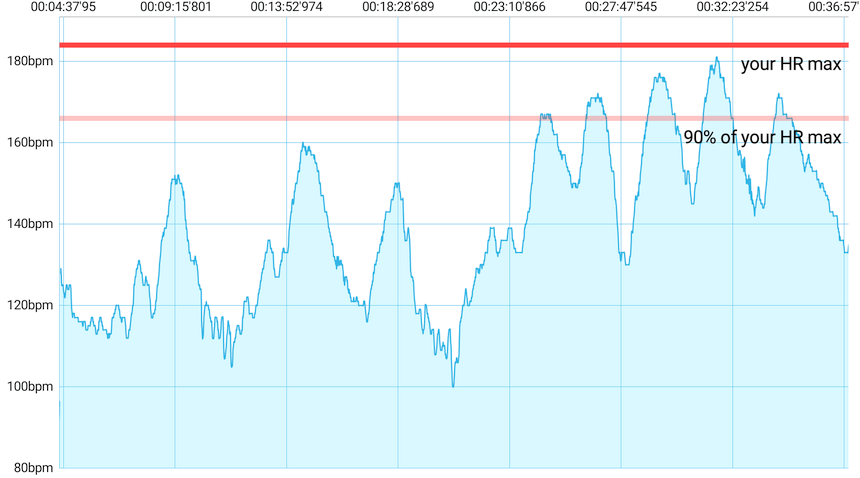
I don't own any expensive smart wearables. For monitoring I use an inexpensive Bluetooth heart-rate monitor chest strap connected to an Android app. That said, your fancy phone probably already provides some sort of a wellness app for this, and your smart watch/fitness tracker most likely comes with its own wrist heart-rate sensor, so you can do the same to see a real-time graph of your heart-rate while doing HIIT, or to collect data for future analysis.
Here's what one of the HIIT intervals would look like in real-time:
As for Ring Fit Adventure — my HIIT workout set is short but intense enough to reach those recommended heart-rate spikes, while providing short cool-down periods in-between, so you don't actually need to bother monitoring your vitals and can focus on the exercises, making sure to give it all you've got while doing them. Still, regardless of how you plan to approach HIIT, make sure to do this first:
Before seriously diving in, do your homework and read up on HIIT.
While most people default to the 220 – age formula for HRmax, it’s a rough estimation. You may want to consider more accurate methods like the Gellish or Tanaka equations to find your true 90% threshold. HIIT is a powerful tool, but don't be reckless. If you have serious metabolic issues, suddenly pushing your heart to the max is a gamble you mustn't take without your doctor's big fat "OK".
Strong Grip, Healthy Wrists
In my original review, I mentioned how holding the Ring Controller and having it resist your movements helps reduce the risk of wrist-related health problems. This advice held true and then some! Doing Ring Fit exercises, combined with 1–2 resistance training workouts a week consisting of chin-ups and pull-ups, resulted in a noticeable increase in my grip strength. Meanwhile, those carpal tunnel-like symptoms never came back, even though I spend a fair amount of time each day in front of my PC with active use of a traditional mouse.
As a bonus, a stronger grip provides a more confident grasp of the Ring Controller itself, helping you keep your focus entirely on what's happening on the screen or around you during a workout, without the fear of dropping the Controller.
More Fitness Tips And Tricks
A few extra tips you might find useful, even if they aren't strictly Ring Fit related.
Dieting
While we're on the topic of intermittent fasting and making gains (terms that are not mutually exclusive), you don’t actually need a massive stack of supplements to avoid cravings and get fit.
You don't need:
- Protein powder — are you a professional bodybuilder or a competitive lifter? If not — ignore this overpriced protein dust. Even with 2026 food prices, 4–5 eggs (say, at $1.25) provide ~30g of protein. A single scoop of premium powder often hits $2.00–$2.50 per serving once you account for shipping and branding. Never mind the fact that eggs are real food, whereas protein powder is sterile, processed isolate that’s been stripped of the micronutrients and healthy fats your body needs to actually function
- BCAAs — meat, eggs, and fish already contain the highest quality Branch-Chain Amino Acids (Leucine, Isoleucine, and Valine). Biologically speaking, they are just three of the nine essential amino acids found in complete proteins. Taking BCAAs in isolation when you already eat enough protein is a waste of money, so don't fall for the marketing bullshit
- Creatine — scientifically proven, but marginally effective for an average person. You only really need to supplement it if you are pushing for peak athletic output or operating at the extreme edge of physical endurance
- …or any other dietary supplements and chemicals — save your money and buy real food and some basic multivitamin tabs
What you do need instead are:
- Eggs, meat, and fish as staple foods — these provide the high-quality, bioavailable protein your whole body needs. Fish especially, as it's the best source of anti-inflammatory Omega-3 fats
- Healthy saturated and monounsaturated fats — butter and tallow (from reliable sources), or avocado to keep you satiated and maintain hormonal health
- Leafy greens and cruciferous vegetables — think spinach, kale, and broccoli as a source of essential fiber and minerals. Just make sure to cook them first to avoid indigestion
- Fermented foods — sauerkraut or kimchi to support gut health, which is often overlooked during IF
- Organ meats — a highly underrated category of food. Chicken or turkey liver, chicken hearts and the like — the "original multivitamins" that offer nutrients you simply can’t get from a pill
There's no secret to a healthy, lean body. The formula is simple: drastically reduce your carbohydrate intake, balance your Omega-6 and Omega-3 fats, and prioritize animal proteins with a complete amino acid profile. A healthy, low-carb diet leads to good cardiovascular health, drastically prolonging your life, as well as increasing the quality of it.
As of today, I would also recommend cutting back on dairy. Unless you’re 100% sure your milk and sour cream come from a reliable supplier, there’s a good chance they're packed with cheap plant fats and seed oils. With the global economy being what it is, producers are under pressure to cut corners just to stay competitive. For me, ditching the dairy led to an almost immediate boost in fat loss, specifically that "stubborn" fat around the midsection. Try it, the results might surprise you as well.
The Lymphatic Pump and The Life-Saving Movement
Exercise isn't just about burning calories or building muscle. Any metabolic process in the body produces waste products that need to be transported and excreted. Here's where the lymphatic system comes in, and one of the reasons why (in my opinion) Ring Fit Adventure introduces particular types of exercises first when you start the Single Player campaign.
The body's lymph system is the drainage network, but unlike blood, it doesn’t have a heart to pump it. Since waste needs to be collected from all over the body and often be transported up against gravity, it relies entirely on muscle contraction to move fluid. And the key muscles the body evolved to use for this? — Our legs.
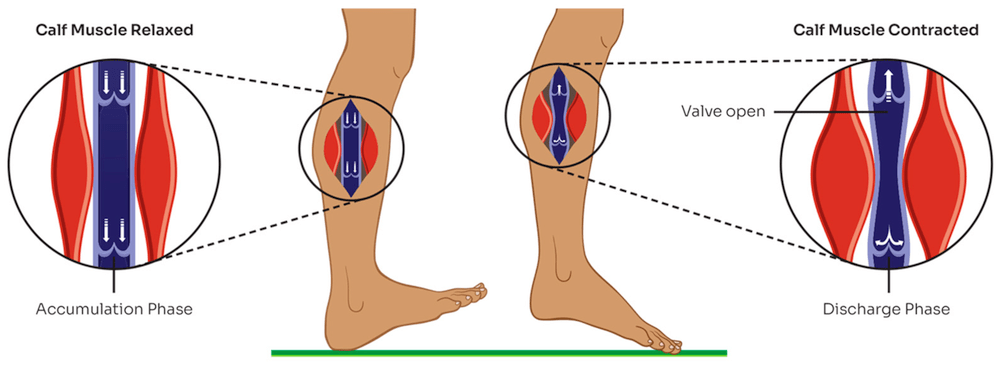
Forget about the various "gurus" with their "superfoods" and expensive kits to "cleanse the body." Just like with weight loss, what you need to do to get rid of toxins is create a scenario where more waste is removed from the body than is coming in.
Guess what? Ring Fit Adventure introduces squats and jogging in place as the very first exercises in the campaign. I strongly believe this is intentional, with two primary goals:
- To "prime the pump" — squatting and jogging in place creates the internal pressure needed to flush out stagnant lymph and boost the healing process before the game starts introducing more demanding move sets
- To strengthen the muscles (duh!) — this is paramount because as you age, your legs get weaker first! See those old people shuffling about, barely able to lift their feet off the ground? Such muscular atrophy can and should be avoided. Weak legs destroy your quality of life and drag you deeper into a vicious circle: weaker legs ⇒ less movement ⇒ more metabolic problems ⇒ weaker legs
To keep the lymph system active and legs strong, you simply need to do what the body is designed for: GET MOVING!
- Walk every day, or at least do a 15–30-minute aerobic workout routine that involves jumping jacks, high knees and jogging
- Reduce the amount of processed and ultra-processed foods in your diet, as they are notoriously full of preservatives and toxins that your liver has to metabolize, and the lymph system has to help transport and excrete
If you're a couch potato or an office dweller, soon after introducing lower-body and leg exercises into your workouts, you'll notice your skin getting better, the dark circles under your eyes fading and your mental fog finally lifting, as the body takes a breather from being continuously poisoned by stale waste in the pipes.
Jogging, Sprinting And Power Walking
Resistance training isn't the only "extra" activity I’ve added to my Ring Fit Adventure routine. And although I dedicated a whole article to Power Walking, I’ve ultimately "graduated" to a high-intensity mix of jogging and sprinting (at least for now). Here is why I made the leap.
My teenage years were defined, among other things, by speed skating and a constant whirr of rollerblades. I grew up on a sports camp regimen of three workouts a day, 6 days a week: a morning run, mid-day strength training, and an evening "wind-down" consisting of long-distance sessions or technical sprints. Running is a world I know well.
So, after power walking for a while, my body was yearning for a sprint. You know, like a good, ass-kicking, short-distance dash until your lungs give out. What followed was a period of alternating between power walking and pure jogging, which eventually evolved into a high-intensity cycle of jogging and sprinting.
Little did I know, this was my body's natural way of slipping into a quasi-HIIT pattern of light jogging and intense sprints!
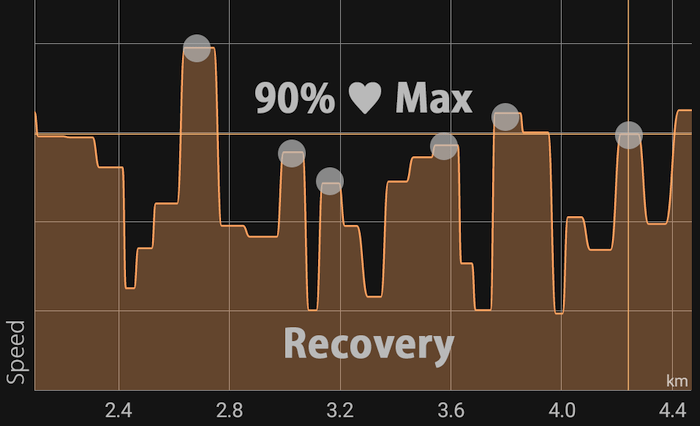
And, because I do these runs exclusively in the woods, along dirt trails and on grass, my knees experience vastly reduced stress. So much so that 3–5 km runs don't result in excessive joint soreness. Thanks to this, I’ve been able to skyrocket my cardiovascular conditioning even further. And when the weather doesn't cooperate, I turn to good old HIIT in Ring Fit Adventure.
Hence my advice: if at some point it feels like you've "outgrown" running in place or walking with weights, and get the urge to challenge yourself — spice things up by jogging and sprinting. Do your runs on a springy, organic surface, and avoid long distances on hard concrete or asphalt, unless you're late for your looksmaxxing circle’s high-stakes underground mewing competition, and only then.
Ring Fit Adventure For Nintendo Switch 2, Doko?

As of June 2026, there's still no official announcement of neither a Ring-Con compatible with the magnetic Switch 2 controllers, nor an updated retail version of the game, let alone a sequel.
Good news is, there have been several signs that Nintendo isn't done with the "exercise game" genre. For instance, throughout 2025, Nintendo filed several patents for "enhanced haptic fitness peripherals". So Ring Fit Adventure 2 might be in development, and will probably be designed to take advantage of the Switch 2's haptics. Also, the original game sold over 15 million freaking copies. Nintendo will never let such a top-seller sit without a sequel, even if it means they choose to release something awful, like thy did with the latest Pokémon series titles (as I've heard, don't quote me on this).
If you want a great "exercise game" right now — get Ring Fit Adventure. It's an electronic exercise catalog aimed at fitness gamification. It literally can't become "obsolete" as long as a human being plays it, and there's hardware to run it on, or at least a way to emulate it — which, from what I’ve heard, is now possible since Ring-Con support was finally implemented in certain emulators.
A SURVEY! Lifestyle Coaching Program. Yay or Nay?
Having done extensive research on everything fitness-related, I decided to compile and organize my findings, as there was so much stuff to keep track of. To do that, I chose to format the data as slides and… well, I eventually ended up developing my own coaching program on a healthy lifestyle.
It's not a humiliating "Just go to the gym, lol" or a trendy "Prana Krishnu Vishnu Ayurvedic" mantra, pushed and praised by "influencers". It's a crash course focused only on the stuff that works, backed by hard data and physiological reality, because your brain will not adopt a new lifestyle or a habit, unless you give it a rock-solid justification. With that justification provided, the brain will identify the key advantages of a new approach compared to previous knowledge and willfully choose to follow a new protocol, drastically reducing the chances of a relapse. A ✈ PIOSEE-like approach, once again, where the new, healthy lifestyle option reigns supreme.
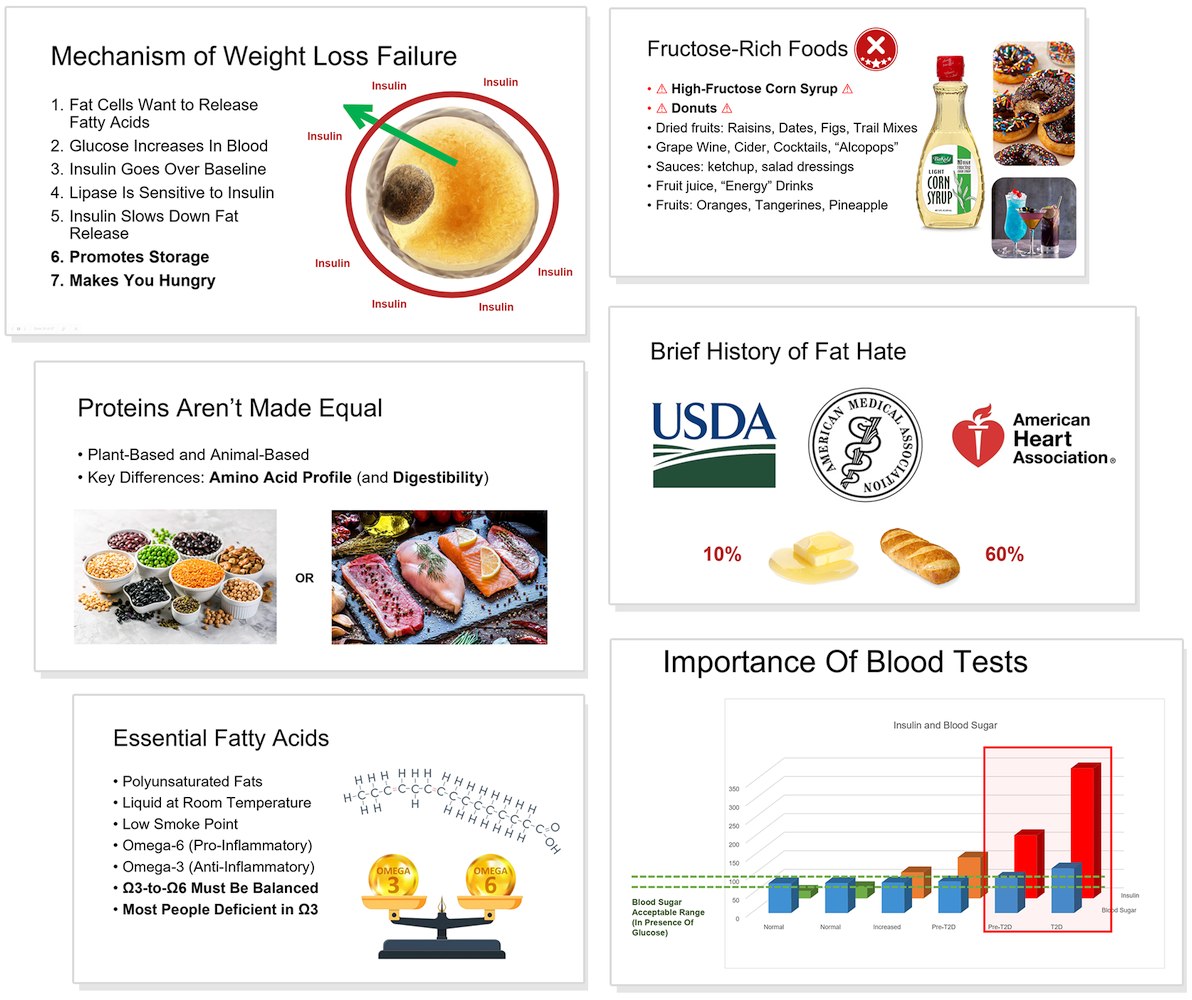
Currently, it's still in the works. The data is already there, the modules and most of the graphics (with animations!) are done. Yet, I haven't decided whether I have enough reason to finish it as a "product", as the most time-consuming part of any project is polish.
If you think you'd be interested in something like this, please let me know by filling out this short anonymous survey (which is also placed at the bottom of the post). I don't collect any personal data and simply want to see whether there's any genuine interest in something like this.
With enough feedback, I might consider finishing the Program and turning it into an actual offer: 1 to 3-month-long Personal Coaching Program. It would feature two weekly video calls and up to 10 modules covering nutrition, intermittent fasting, dietary myths, insulin resistance, autophagy, exercise and other topics, strictly limited to what is actually effective for driving permanent lifestyle change.
With such lifestyle change weight loss becomes an inevitable "side-effect", rather than a superficial goal in itself, as sustainable results are biologically impossible without the reversal of fundamental metabolic issues. Weight loss is a "byproduct" of health, not the cause of it.
Simply speaking: You don't lose weight to get healthy. You have to get healthy to lose weight.
In all honesty, results should always speak for themselves. I’ve demonstrated the kind of shape I can maintain as a 40-year-old. If this is something you’d like to achieve (and sustain!), and have been struggling to get there — let me know below:
And in the mean-time — good luck with your fitness endeavors!