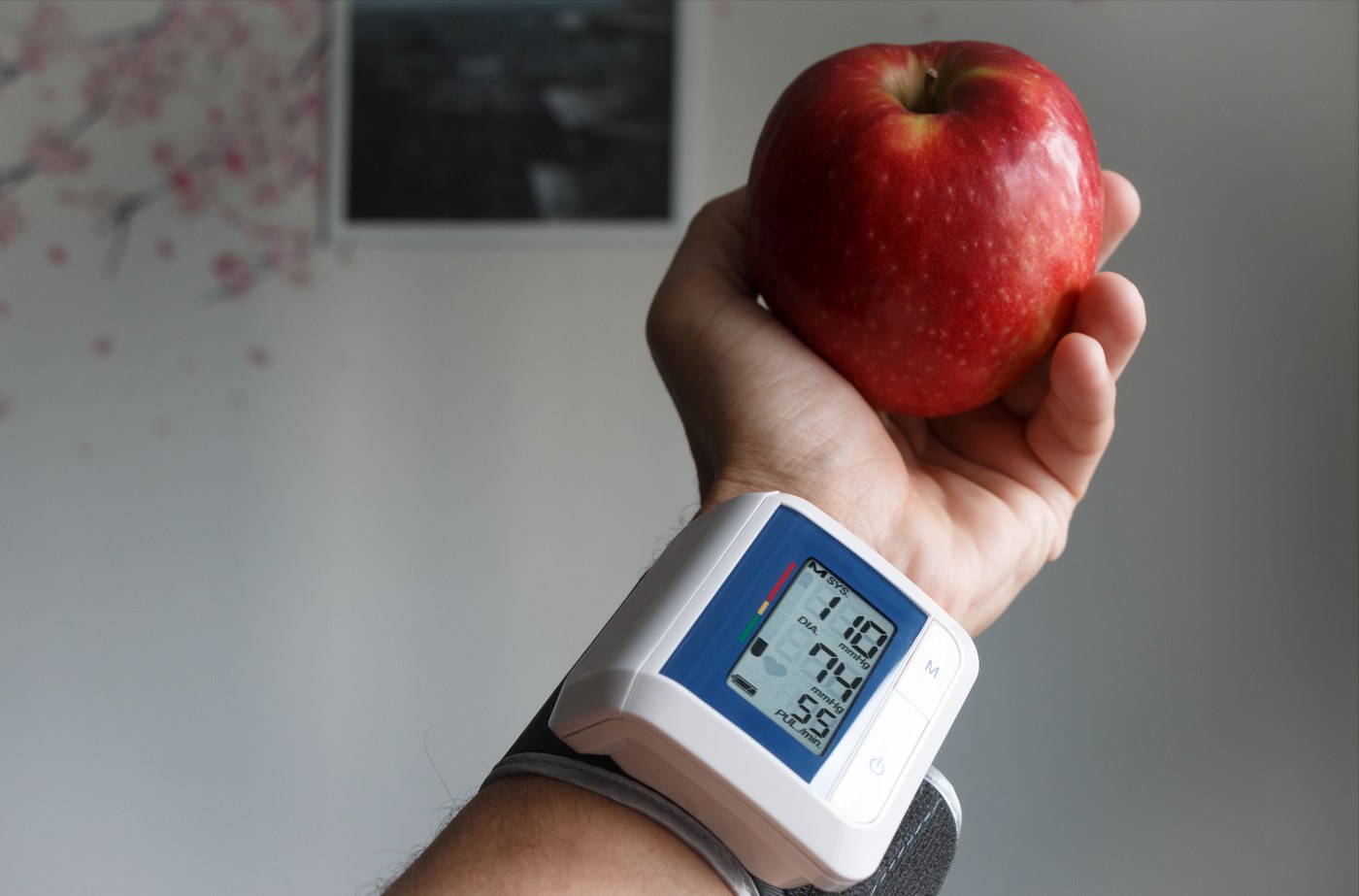
In my recent post, Celebrating 6 Years of Fitness with Ring Fit Adventure, I mentioned the importance of a proper diet and lifestyle for good cardiovascular health. Instead of digging too deep into the topic in that post, I chose to dedicate this addendum to the topic.
Since I'm leisurely working on my healthy lifestyle coaching program, I needed to gather metrics to show how effective the low-carb lifestyle is at supporting longevity and metabolic health.
This post dives into the topic of measuring blood pressure and what results one might expect by adopting the low-carb lifestyle. It's a bit involved (what is it with me and deep dives lately?), but totally worth your time, I promise. I will show you hard numbers and dynamics of what happens to the body on a day of intermittent fasting, after exercise and on a full day of a water fast, to help you realize that the body can manage itself just fine without stimulants.
It's a Series of Tubes!
Our circulatory system is a dynamic hydraulic circuit, driven by the heart that pumps blood through all sorts of blood vessels in the body in order to help deliver oxygen and nutrients to tissues. Just like any plumbing system, this setup relies on pressure dynamics to function. Blood pressure is the force this fluid exerts against the vessel walls and is regulated by how hard the heart pumps, how much fluid is in the system, and how tightly the vessels constrict. When any of these variables shift, the pressure changes, dictating how effectively our organs get fed.
The pressure in the system has to constantly adjust to strictly meet the demand depending on the requirements of the organs in the body based on the type of activity. Or inactivity — something more and more people are leaning into nowadays. This pressure needs to be somehow measured, and there are two types of pressure metrics used to do just that:
- Systolic — the peak pressure. This is the measurement taken right when the heart-pump squeezes and forces a fresh gush of fluid into the blood vessels
- Diastolic — the resting pressure. It's the measurement taken in the brief moment between beats, when the pump pauses to refill, showing the base-line pressure left in the circulatory system
In most cases, the resting BP is the metric to look for as it helps avoid variability. It's your blood pressure measured when you are completely relaxed, still, and at peace — usually after 5-10 minutes of either sitting still or lying flat.
Is There an "Ideal" Blood Pressure?
Chances are you've seen this particular pairing of numbers: "120/80".
These digits have gained notoriety over the years as they usually describe a demographic that contains the very people who, for the first time in their lives, decide to look up the term "blood pressure", or are given a wake-up call by their physician. It's people aged 30-50, who might be going through their first age-related metabolic changes or issues. A reading of 120/80 mmHg is often perceived as "ideal", but without any context these are just meaningless numbers, and not a guideline.
In practice, the "ideal" numbers are directly related to one's metabolic health.
This whitepaper from 2003 states what's been widely accepted as a guideline over the years:
US guidelines categorize blood pressure as normal (<120/80 mm Hg), pre-hypertension (120/80 to 139/89), stage 1 hypertension (140/90 to 159/99), and stage 2 hypertension (≥160/100 or higher). In people aged over 50 years high systolic blood pressure (above 140 mm Hg) is considered a greater risk factor for cardiovascular disease than high diastolic blood pressure.
"The risk of cardiovascular disease begins at 115/75 mm Hg and doubles with each increment of 20/10 mm Hg; individuals who are normotensive at 55 years of age have a 90% lifetime risk for developing hypertension," the guidelines say.
For reference, a blood pressure measurement over 180/120 mmHg is called a hypertensive emergency or crisis.
So then, if the risk of cardiovascular disease starts doubling at anything over 115/75 mmHg, then a reading of 120/80 mmHg means your "pipes" are already under a constant, elevated strain. In the world of Western medicine, "normal" often just means: "You don't need prescription medication yet."
Instead of chasing a generic, outdated base-line, the real goal is to understand how your daily habits keep those blood vessels relaxed, open, and flowing smoothly, and whether lifestyle changes are necessary before it's too late.
Automatic Blood Pressure Monitors to the Rescue
If you decide to start measuring your blood pressure at home, you'll quickly find two main types of automatic monitors on the market. I actually own both: the classic upper-arm sleeve and a new, ultra-compact wrist cuff version. Both are well-calibrated, but they serve slightly different purposes.
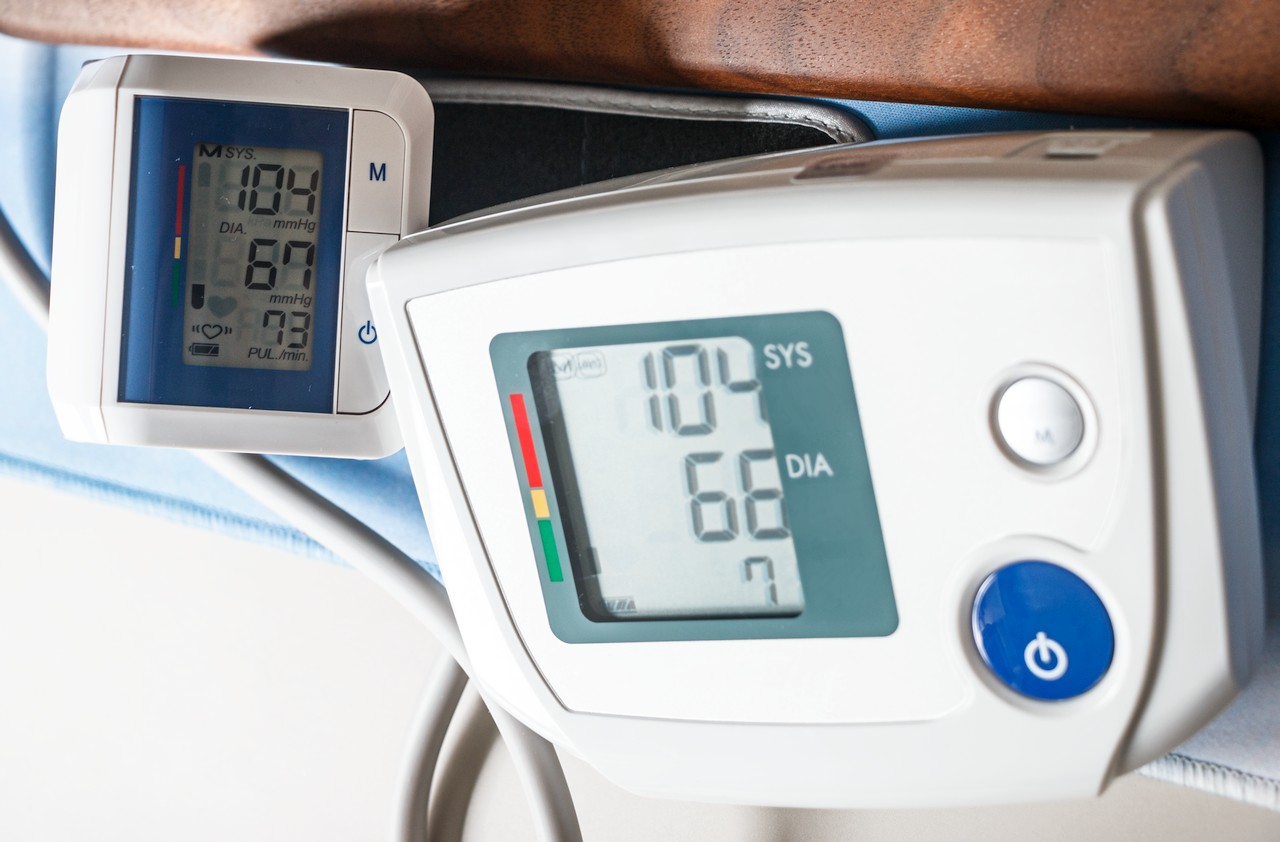
The wrist monitor is truly a marvel of engineering, somehow fitting a miniature air pump, sensors, and a digital display into an ultra-compact body. It delivers readings within 5% accuracy, but requires proper technique, or otherwise it can easily report falsely high readings.
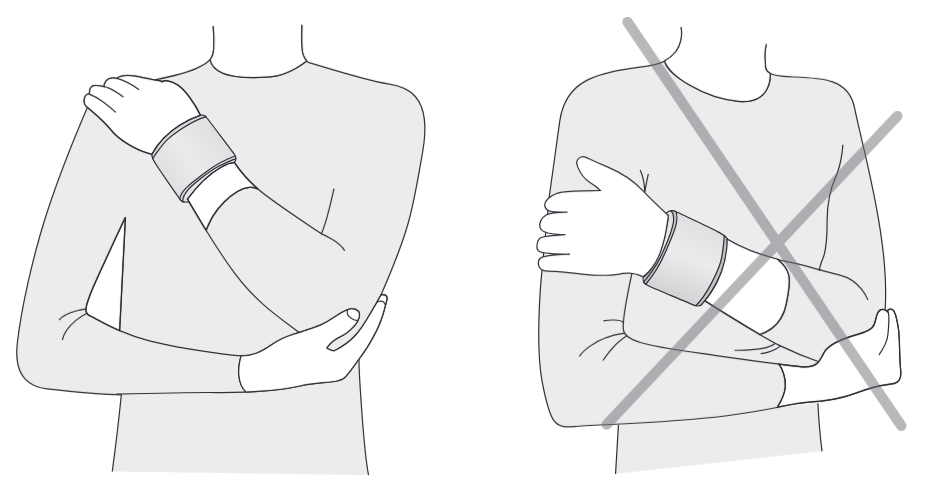
I need the portability for hour-by-hour readings for my own self-tracking studies, as well as have ample experience with the wrist BP monitors, which is why this is the device of my choice. As a tech guy, I also simply love this thing so much.
However, if you are looking to start measuring your blood pressure to get to know your own body a bit better, go with a traditional upper-arm monitor for the most accurate, effortless readings. Reserve the compact wrist model only if you need the ultimate portability, and/or are willing to learn the exact posture required to get an accurate reading. Automatic blood pressure monitors are so inexpensive nowadays that there's no excuse not to have one at home.
Blood Pressure Case Study
Meet the guinea pig of this month's study:
At the time of writing, I'm 40 years old, 185 cm tall and weigh under 79 kg (6'1" and 174 lbs respectively). At rest, after sitting for 5 minutes, my base-line BP sits right around 110/73 with a resting heart rate of about 55-60 bpm. As the data will show later, this is my current nominal base-line.

I decided to to isolate variables and map my blood pressure hour-by-hour across two meaningfully different scenarios:
- The 42-Hour Water Fast — a full day of zero caloric intake following a previous day where I finished eating at 10AM, allowing my body to gradually ramp up autophagy and reach its true blood pressure base-line (among other benefits of a water fast)
- The "Re-feeding" OMAD Day — a "One-Meal-A-Day" schedule where I packed my entire caloric intake into a short, 4-hour window. The goal here was to both eat and to track the exact hydraulic aftermath of a heavy metabolic load
In both cases no stimulants were taken at any point: no tea, coffee or energy drinks, to avoid contaminating the results with random BP spikes.
Here are the results:
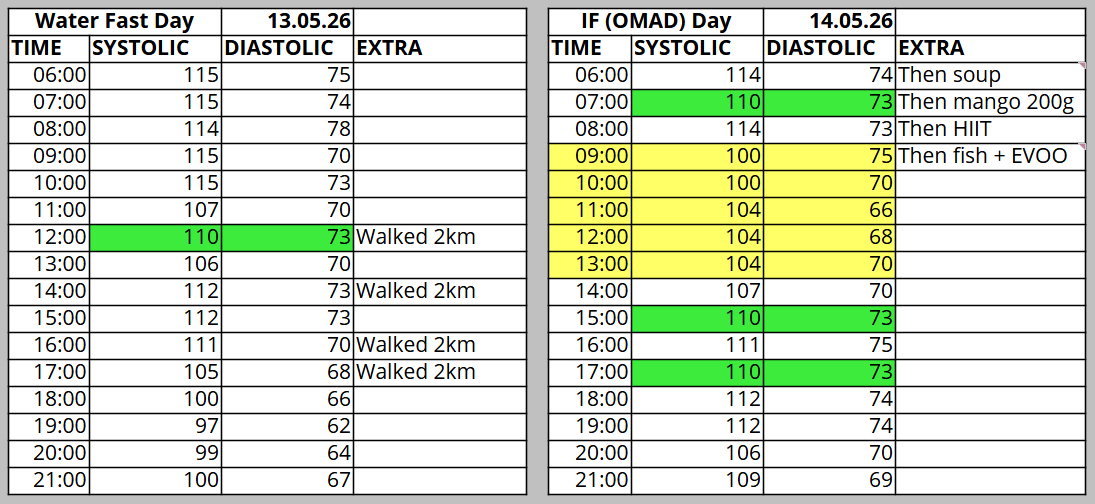
Now let's go over them in detail.
42-Hour Water Fast Blood Pressure Dynamics
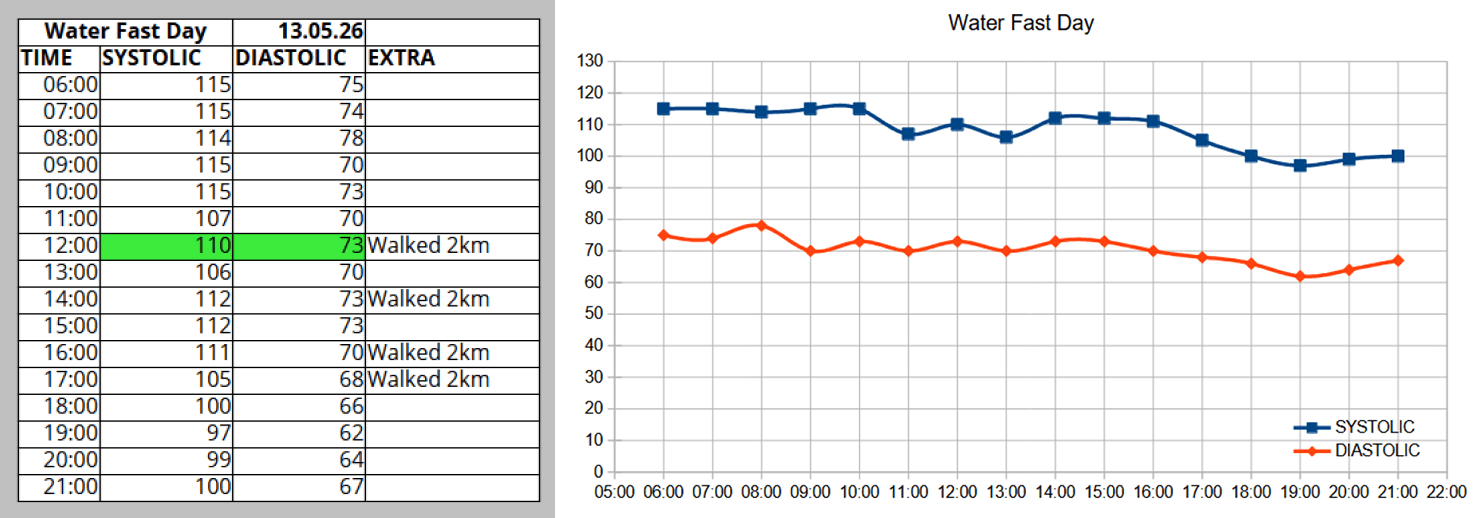
The fast had begun at 10AM of the previous day, as soon as I had my final meal of the day, so I woke up at 5AM after about 18 hours of fasting to begin with. This is why I refer to this as a 42-hour fast, rather than a 24-hour one.
Chronological breakdown:
- 06:00 – 10:00 — the 20-to-24-hour total fast duration. As I crossed the 24-hour fasting threshold at 10:00 AM, my blood pressure remained stable, hovering around 115/74 mmHg. At this point, my liver glycogen stores were severely depleted, prompting my body to rapidly ramp up gluconeogenesis and initial ketone production. Which may explain slightly higher BP compared to my usual 110/73 base-line
- 11:00 – 15:00 — my systolic pressure began to trend downward, dipping to 107 mmHg at 11:00 AM. The first 2km walk at noon caused BP to settle at a highly efficient 110/73 mmHg
- 16:00 – 17:00 — I felt so good, and the weather was so awesome, that I simply had to continue my stroll throughout the woods and the parks. Instead of triggering a spike in blood pressure, this steady physical activity safely circulated my rising ketone levels and helped flush out lingering metabolic waste (recall my lymphatic system notes from the original post). And blood pressure? — As stable as it could ever be
- 18:00 — the 36-hour mark, my blood pressure dropped to 100/66 mmHg. By this hour, my brain had primarily transitioned to using beta-hydroxybutyrate (BHB) for fuel. Because BHB is a highly efficient, "clean-burning" fuel compared to glucose, it produces fewer reactive oxygen species (ROS) and acts as a direct signaling molecule to suppress systemic and neural inflammation. This is one of those key fasting benefits that has nothing to do with weight loss, and is often overlooked, but is vital for longevity and to prevent the onset of Alzheimer's. I was very focused and felt incredibly productive
- 19:00 – 21:00 — blood pressure bottomed out at 97/62 mmHg at 19:00 before stabilizing at 100/67 mmHg by 21:00. This is the period when I needed to be careful when standing up after sitting or lying for over 10 minutes, to avoid a head rush. I'll explain this phenomenon below. Otherwise — I felt perfectly fine, as expected from the body running on ketones
Utilizing the Rate Pressure Product formula, I can quantify my overall cardiac relief:

Comparing a nominal state (110/70 mmHg with a resting HR of 60 bpm) to my deep-fasting evening state (100/55 mmHg with a resting HR of 55 bpm), with just the systolic values, I calculated an approximate 16% drop in total cardiac workload. For the duration of this fast my heart muscle was "idling" efficiently and undergoing a period of physiological rejuvenation. For free. No meds required. If my non-fasted resting BP and HR were any higher (closer to what's considered "normal" nowadays, like the aforementioned 120/80 and HR of 70-80 bpm), this difference would've been even more drastic, leading to more profound healing effects — I'd estimate the relief at about 33% in such a case.
There's a "catch" — in my case, when I reach 100/65, I get to the threshold of orthostatic hypotension. In such a state, if I quickly get up from a sitting or a fully horizontal position, I will likely get a head rush, because the physics of gravity simply move faster than my blood vessels can constrict when I transition from sitting to standing. Do realize that the fact that we can just casually lie down, get up and walk about is an exceptional feat of bio-engineering by Nature. With how the gravity changes the hydraulic pressure inside the whole cardiovascular system full of vast amounts of liquid blood — each pose change is basically a small miracle that we take for granted.
Fasting naturally causes the kidneys to flush excess sodium and water. With slightly lower "tank pressure", there is less volume to immediately fight the pull of gravity toward the legs.
That's not a problem though, as one can follow a three-stage pattern to rise on low BP during prolonged fasts:
- Flex — before standing, tense your calves and thighs for 5 seconds to "prime" the blood to move upward
- Pause — sit on the edge of the bed or chair for 3 seconds
- Get up — stand up slowly
All in all, the fact that I could comfortably do 8km (5 miles) of walking by the end of a 42-hour water fast, and actually see a decrease in systemic stress (115 => 100 systolic) clearly demonstrates how beneficial fasting can be for the longevity of the cardiovascular system.
Intermittent Fasting Day with OMAD
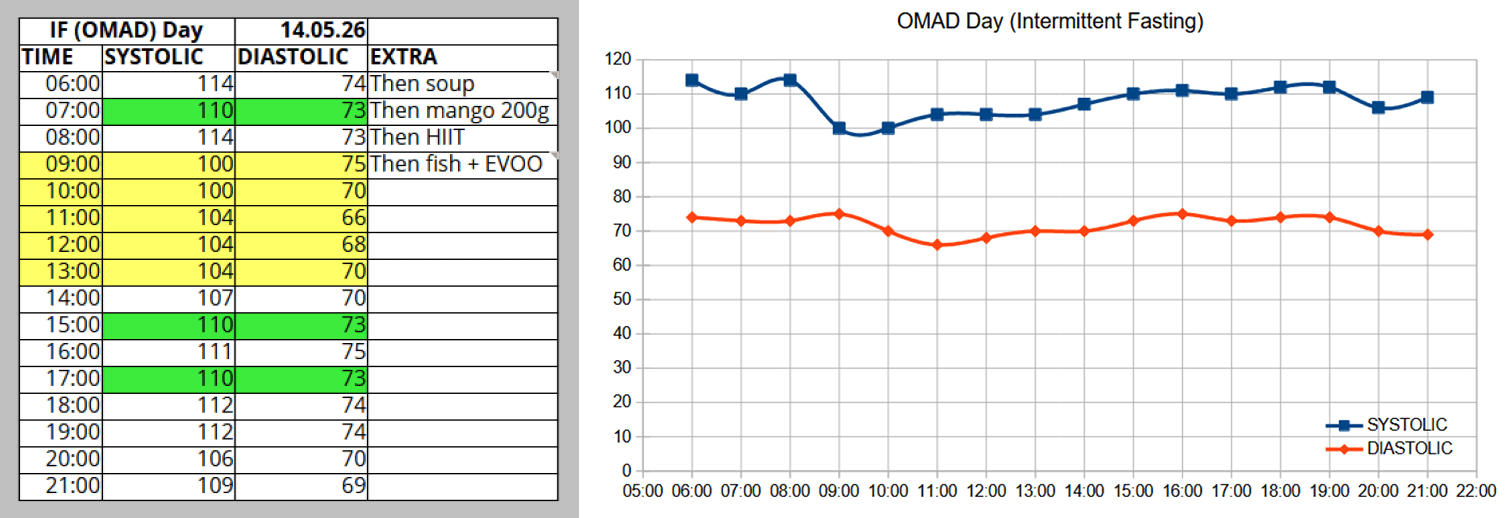
Following the 42-hour water fast, I transitioned into an Intermittent Fasting day with One-Meal-A-Day (OMAD). The menu was designed to be nutrient-dense, but not very energy-rich: a dense soup featuring chicken hearts, turkey livers, and vegetables, followed shortly by 3 eggs, 200g of green unripe mango, and a final course of salmon drizzled with 2 tablespoons of extra virgin olive oil and leafy greens. The entire feeding window commenced at 06:00 AM and was wrapped up tightly by 10:00 AM.

Taking pictures of food… I'm a real wellness influencer now!
By strictly eliminating all external stimulants like tea, coffee, or dark chocolate, the data captured below serves as a pure, unadulterated reflection of the overall state of my ciruclatory system.
Chronological breakdown:
- 06:00 — the "Dawn Phenomenon". I woke up to a blood pressure of 114/74 mmHg. This slight elevation compared to my deep-fasting evening numbers is an example of the "Dawn Phenomenon" — a natural cortisol and growth hormone surge that happens upon waking up to mobilize energy stores and prime the body for the day
- 07:00 – 08:00 — right after breaking the fast, my systolic pressure dropped to a familiar 110 mmHg at 07:00, before ticking back up to 114 mmHg at 08:00. This is where biochemistry may have played the role: the fructose and glucose from that 200g of mango went straight to my liver and muscles to replenish depleted glycogen stores. This carb placement was no accident, as it primed my glycogen stores for the intense physical output that followed
- 09:00 – 13:00 — the HIIT and the BP drop. At 08:00, I hit a high-intensity interval training (HIIT) session. What followed from 09:00 onward (highlighted in yellow) was a so-called "post-exercise hypotension". My blood pressure plummeted to 100/75 mmHg and sustained an low average of 102/70 mmHg for the next five hours. Why? I'll explain in a minute
- 14:00 – 17:00 — returning to the base-line. As the metabolic effects of the workout settled, my cardiovascular system smoothly transitioned back to my nominal base-line of 110/73 mmHg. There was absolutely no "rebound" spike or post-meal hypertension, validating my choice of high-quality fats, clean proteins, and low-glycemic vegetables over processed alternatives as a good way to recuperate after both 40+ hours of water fast and a HIIT workout
- 18:00 – 21:00 — the fasting state. Again. Because my eating window closed early at 10:00 AM, my body spent the afternoon transitioning right back into a fasted state. Thanks to salmon and extra virgin olive oil, my insulin hit its floor much faster than if I had ended with a carbohydrate meal. This allowed my kidneys to initiate natriuresis (the shedding of sodium and water) early in the evening, explaining the low diastolic readings of 66–70 mmHg
It sounds entirely counterintuitive to feel strong and push a high-output workout while technically operating on an intentional calorie deficit right after a 42-hour fast (designed to shave off that slight belly pooch built up during the winter months). Yet, I felt phenomenal. This is a direct byproduct of the hormonal response triggered by the preceding fast:
- Growth Hormone (GH) spike — fasting triggers a massive upsurge in GH to protect lean muscle tissue and bone density. Dropping a resistance or HIIT workout right at the tail end of a prolonged fast is a trick to cause the cellular adaptation to last even longer
- The Counter-Regulatory Hormone surge — after 24 to 36 hours without food, the counter-regulatory hormone norepinephrine levels are rapidly ramping up. This is our evolutionary "hunter-gatherer" mechanism at work where one's body chemically primes to be hyper-alert, strong, and physically capable so one can successfully track down the next meal. We're predators, after all! We've been predators for eons, and our fundamental biology hasn't changed one bit since the dawn of the industrial revolution
Anyway, I had essentially spent my entire day in a "cardiovascular safe zone" of sorts.
A typical, modern lifestyle involving multiple meals, snacks, and stimulants keeps the human body in a perpetual state of digestion and low-grade sympathetic activation. This often causes systolic blood pressure to spike by 10–15 points after every meal, taking 4–6 hours to return to nominal. If you eat three to four times a day, your heart almost never gets a break.
By compressing my nutrition into a tight 4-hour window, I experienced that minor digestive metabolic shift early in the morning, allowed my blood vessels to thoroughly relax post-workout, and then spent the remaining 20 hours of the day letting my heart enjoy the dilated blood vessel and low-insulin environment. This illustrates why an Intermittent Fasting or the OMAD pattern is an incredibly potent tool for cardiovascular longevity: it drastically reduces the cumulative, daily pressure workload on one's arterial walls. I want to live long, and have good quality of life throughout. Don't you?
BTW, before you get the impression that I only eat "boring" food, let me assure you that's not the case. Check out the biscuit apple pie I baked the very next day:
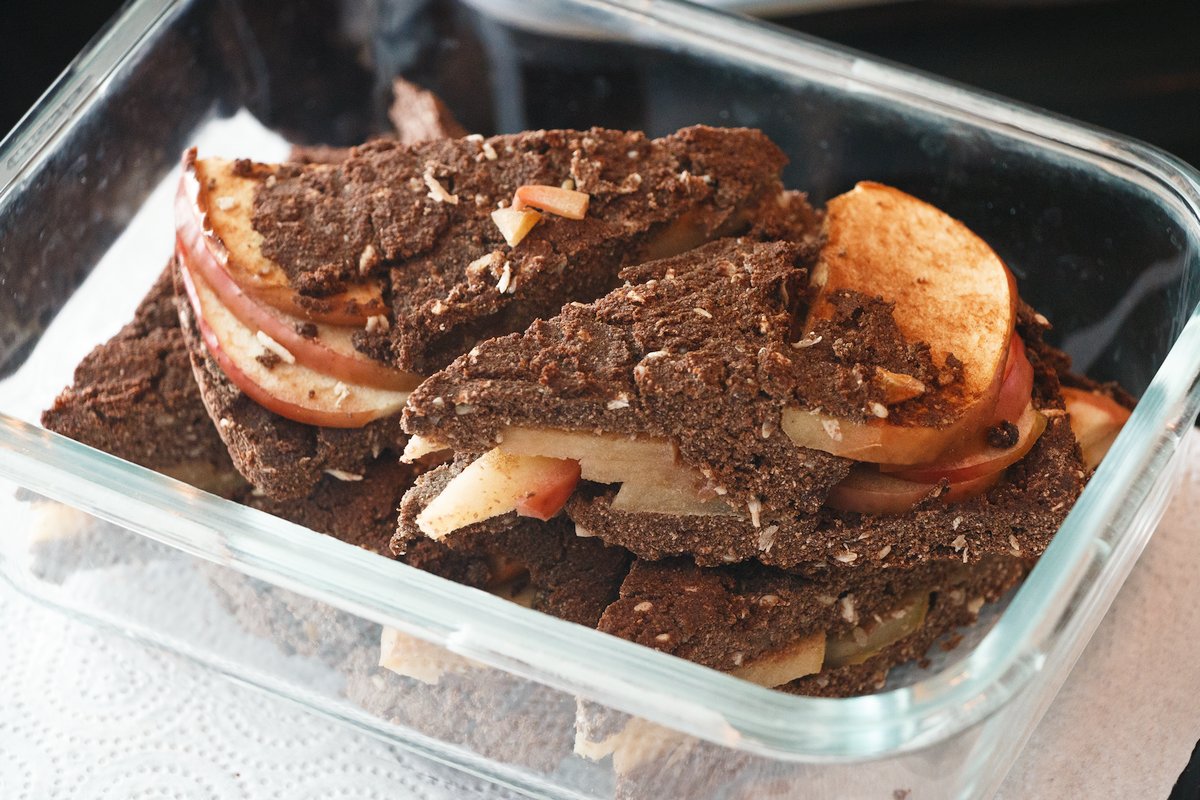
No added sugar, no artificial sweeteners, just eggs, coconut and sunflower seed flours, cocoa fibers, cinnamon, coconut shavings and apples. Baked for 40 minutes at 180C. Tastes like heaven, too.
Why Post-HIIT Vasodilation Lasts So Long
HIIT training increases the stroke volume of one's heart. After decades of aerobics, and among those — 6 years of Ring Fit Adventure, where the last 4 years were mostly spent doing a custom quasi-HIIT workouts 2-3 times a week — it's no wonder that my vitals are way below 120/80 at rest, but what about the workout and the hours that follow?
The most fascinating data block from this experiment is the immediate and prolonged drop in blood pressure following my 08:00 HIIT session the day of recovery. In medical literature, this is known as "Post-Exercise Hypotension" (PEH).
During HIIT, my heart rate spiked high to meet the demand for the muscles all over the body, and my blood vessels opened so effectively that the systemic pressure plummeted the moment I finished the workout. The fact that my blood pressure dropped all the way down to 100/70 mmHg and safely coasted there for hours can be used to assess the health of my cardiovascular system. It's good. It proves that my blood vessels possess good elasticity and endothelial function. They can dilate effortlessly and remain relaxed, completely outweighing any residual stress hormones from the workout.
HIIT also creates a large "thermal debt." The body keeps peripheral vessels dilated for hours to move heat from the core to the skin, which keeps systemic pressure low.
So a mere 10 to 15 minutes of high-intensity intervals bought my cardiovascular system five full hours of deep, low-pressure recovery. That is a massive return on investment. By pushing the system to its limit for just a brief moment, the body responds by opening the floodgates and keeping the entire arterial network relaxed for a huge chunk of the day. If you want to keep your heart and blood vessels young, the most effective way to do it is to give them that extended, low-workload breathing room. I won't even mention the "VO2 Max" improvements you get — let this be something you discover on your own.
How Low Is Too Low?
There’s a limit to how far you can down-rev the engine before it stalls, right? If human blood pressure could safely coast at 80/50 mmHg all day without consequence, evolution would have already made that our default base-line.
In the medical world, blood pressure is usually only considered "too low" (hypotension) if it is accompanied by symptoms. So blood pressure readings similar to mine would be considered fairly low if I were to experience any signs of orthostatic hypotension. Which I don't. OH is a sudden drop in blood pressure when you stand after sitting or lying down, usually indicating that one's body's autonomic nervous system or cardiovascular system isn't reacting quickly enough to the change in position. It's usually caused by dehydration, autonomic nervous system disorders, heart problems or anemia.
On a strict low-carb/keto-leaning diet, blood viscosity can actually be slightly lower, and systemic inflammation is typically minimal. Insulin plays an important role here: since I have low circulating insulin, my kidneys aren't "holding onto" excess fluid either. With enough electrolytes (like table salt) the body has everything it needs to maintain the necessary pressure without needing to constrict one's blood vessels to a dangerous degree.
By avoiding overpriced performance supplements like whey/casein protein and sticking to whole foods like eggs, fish, and olive oil, I'm avoiding the hidden inflammatory markers (like seed oils or excessive fillers) that can stiffen arteries. Since I'm not dizzy at my BP of 110/73 resting and about 129/85 within a minute after finishing an intense HIIT session, my body has adapted to operate at a lower systemic pressure because the body is lean, the "plumbing" clear, and the heart is efficient.
Large-scale meta-analyses typically show a U-shaped or J-shaped curve for mortality. And I've been told that the average 40-year-old man today typically carries a resting BP of 125/80 to 135/90 mmHg. This doesn't look too good:
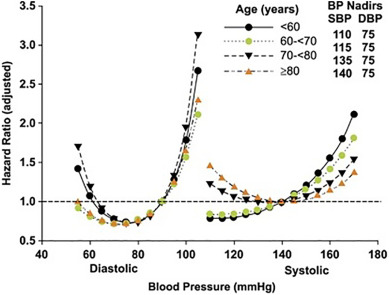
While the average might not quite be 140/90, a massive percentage of 40-year-old men are walking around in a state of chronic, undiagnosed Stage 1 hypertension. They have "stiff" arteries due to a combination of chronic high insulin caused by frequent eating, sedentary lifestyle, and sub-clinical inflammation. This is because most people nowadays are "sugar burners" and are putting their bodies though a never-ending insulin roller-coaster. And when their blood glucose dips, their strength vanishes. It is their mitochondrial health that is severely lacking.
Still, blood glucose is not inherently "evil", and it's a resource that can and should be intelligently managed…
Glucose Boost for Faster Glycogen Recovery
There's a certain trick to my success. Note how I mention eggs, fish, meat and leafy greens, but don't spend much time talking about carbs? Well, to efficiently recover after a 30 km (19-mile) bicycle ride on a mixed terrain, or a high intensity interval training session, or a couple intense custom Ring Fit Adventure workouts, one needs to replenish their glycogen. To do this there are two strategies:
- Keep eating low-carb. This will noticeably prolong the duration of recovery because a fat molecule (triglyceride) contains three fatty acids sitting on a glycerol back-bone. Two glycerol molecules can make up one glucose molecule, therefore recovering on keto by relying on gluconeogenesis is a fairly slow process
- Add carbs to the diet. Not a lot! Depending on the type of the workout, it can be anywhere from 20 to 50 grams of carbohydrates. In my case, whenever I feel "out of batteries", I eat a green, firm mango (about 300-400 grams). This helps "recharge my glycogen capacitors" (liver and muscles) and completely restore my ability to be active
With this strat, unless you're a competitive lifter, you won't ever need a "cheat day," but rather rely on "precision recharges" whenever your body actually needs it. And no more than that!
Carbohydrates should only be used as a "tool" to rapidly replenish glycogen reserves when you're 100% certain you're either lacking, or are about to undertake an adventure — be it a long bike ride, an aerobic workout or a resistance training session.
Here's where I found a good balance: with a green, largely unripe mango, I both don't over-indulge myself on carbs, and avoid causing a large insulin spike, because an unripe mango hasn't broken its complex starches down into simple sugars yet. This is why it has a lower glycemic impact and helps avoid the reactive hypoglycemia (the "crash") that some people get when they reintroduce high-glycemic fruit after becoming keto-adapted.
But do you know what eventually leads to a "brain crash"? Coffee!
Coffee… Oh, Coffee…
Regular readers of my blog are probably aware of my opinion on coffee and other caffeine-rich beverages in general. Here's a quick run-down:
Most people treat coffee like a sacred cow, but I'll look at it through the lens of homeostasis.
The body has a perfect, multi-million-year-old system for waking itself up. Introducing a foreign alkaloid like caffeine is effectively "overclocking" a system that didn't ask for it. You’re essentially saying we are borrowing energy from tomorrow, and paying for it with your long-term hormonal health:
- Adenosine Debt — caffeine doesn't create energy and instead masks tiredness by blocking adenosine receptors. When the effect wears off, the "debt" is still there, often leading to a cycle of systemic burnout of the brain
- Mineral Depletion — coffee is a diuretic and can interfere with the absorption of magnesium, calcium, and potassium. They're kind of important for like the heart and junk, man. Millions of people are overfed but undernourished, walking around with sub-clinical deficiencies in magnesium, potassium, and B-vitamins due to their diet rich in ultra-processed foods. When a body is already running on empty, even a mild diuretic or a slight interference in nutrient absorption matters
- Vaso-constriction — while people think it "wakes up" the brain, coffee actually reduces cerebral blood flow. For regular drinkers, the brain increases the number of adenosine receptors and adjusts vascular tone to normalize blood flow. This is why daily drinkers don't walk around with permanently restricted brain blood flow, and it's also why they get a massive headache if they suddenly skip their morning cup
- "Franken-Coffee" Vicious Circle — talking about "morning cups": those giant sippy cups people get from large fast food chains? — That's not coffee, but liquid sugar bombs. When you combine caffeine (which raises cortisol and blood glucose slightly to mobilize energy) with 40 to 60 grams of refined sugar, you wreck your metabolism. The insulin spike drives glucose into storage, causing a subsequent blood sugar crash, while the caffeine continues to stimulate the nervous system. This leaves the drinker jittery, exhausted, and craving more sugar and caffeine to get back to "normal"

Hence my stance on this matter:
Coffee is not the answer.
It's a stimulant. If you truly need coffee in the morning or throughout the day — you're either sleep-deprived, or your metabolism is broken. Or both. You can't "supplement your way" out of a broken metabolism with stimulants or drugs. Instead, you should do this with good sleep and water fasting, where you restore your circadian rhythm and force the body to undergo autophagy for cellular cleanup, to reset insulin sensitivity. In that context, using coffee to "get through the day" is just putting a bandage on a wound that needs stitches.
From a biological standpoint, caffeine creates a systemic state of emergency in the body where none exists. The aforementioned "Dawn Effect" already leads to the body raising cortisol, HGH, adrenaline and glucagon — hormones aimed at increasing glucose in blood by up-regulating gluconeogenesis. Which also increases lipolysis. All of this indirectly boosts the production of insulin. This is meant to mobilize the body's energy stores to go and find food. When you have coffee in the morning, you force the adrenal glands to pump out even more epinephrine (adrenaline). Adrenaline signals the heart to beat faster and with more force, increasing systolic pressure. It's a tremendous stress on the whole body!
As for lean people with low body fat % and lower resting BP readings — small amounts of stimulants will disturb one's vitals even more than they would a "numbed" system. This is something I can attest to: two years ago I got used to drinking a cup or two of unsweetened coffee a day, until I noticed that my sleep quality declined. After quitting coffee, within just a couple of weeks I returned to normal. Then, after about 6 months I did an experiment by having just 1 (one) cup of coffee. I felt as if I had had ten. I was restless, super-aware and then, after a couple hours, crashed hard, as expected: sleepy, grumpy, twitchy… Ergo, no more stimulants. There's no need to unbalance a system that works like a charm on its own.
I'm willing to bet that you are drinking coffee because your lifestyle is an artificial construct of the 19th-century factory system. So before you choose to hunt me down with furious anger: the coffee bean itself isn't the problem. It's how society and businesses weaponized it. The 9-to-5 factory and office system required people to work long, unnatural hours at peak productivity, and coffee became an easy to market solution to that. Over time, the system has turned that necessity into an overpriced and "elite" daily ritual. You’re told you "need" a morning cup from a fast-food chain or local brewer, but you're just paying a premium to keep yourself running on an artificial schedule. And if you're not a part of a big machine, then you're just blindly adopting a lifestyle that's not even meant for you.
I promise you: within the next 30 to 50 years we will look back on coffee dependency the way we look back on smoking in offices — as an archaic nervous-system hack, used to cope with grueling work schedules. Praise and corporate promotion surrounding coffee has come from giant global businesses that profit from growing, processing, or brewing it, and not from a place of public health.
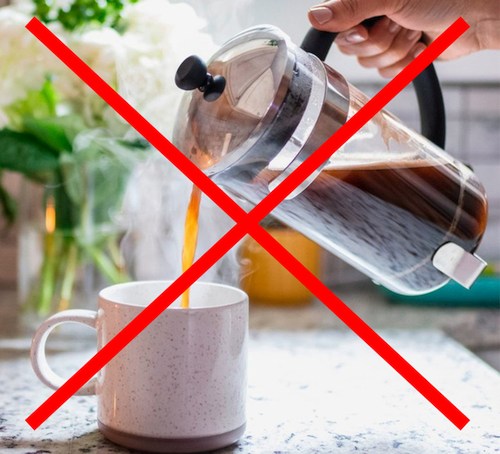
Say no to coffee and your quality of life will improve.
And whenever you feel like you need to drink something in the morning — it's your body telling you to just drink water. After hours of sleep, your body is dehydrated, placing a higher base-line strain on your cardiovascular system. Rehydrating first thing in the morning restores your systemic fluid balance, allows the kidneys to flush out cellular waste, and wakes up your digestive tract without triggering a single stress hormone.
CGI coffee is OK tho. Stick to that one.
The Key Markers of Metabolic Health
I believe that if you want to know where you truly stand, A1C (your 3-month blood glucose average, tested in a lab) and your resting blood pressure are the two most telling markers of metabolic health. One simply cannot be within a healthy range without the other.
By taking strict control of these metrics, you achieve two key goals:
- You'll stop the "caramelization" of your tissues by avoiding the heavy glycation (sugar-binding) that happens when you bomb your system with cakes, breads, and rice. This will help prevent stiffening of your collagen and arterial walls, leading to better-looking skin as well, among other benefits
- You'll support natural vasodilation by fueling your body with whole foods like fish, eggs, and olive oil (with extra garlic and onions). Your body will be getting the raw materials it needs to pump up nitric oxide levels. So when you hit a HIIT session or lift weights, your muscles will be able to demand and instantly receive the massive volume of blood needed to pop your blood vessels open for an incredible pump, without forcing the heart to work in overdrive
Look up "A1C", and maybe even do a test. Ideally, your HbA1c should be below 5%.
Low BP for a Long, Active Life
Compared to the standard modern lifestyle of constant snacking, chronic high insulin, and a dangerous prehypertensive resting BP, a low-carb, time-restricted lifestyle is vastly superior for cardiovascular longevity. It's a numbers game. By avoiding the blood glucose roller-coaster and taking longer breaks between meals, you'll be effectively giving your heart a chance to recuperate for 10 to 20 hours a day. If your blood pressure is only elevated for a brief 2-to-6-hour window around a workout or a meal, your cumulative arterial stress over a lifetime will be incredibly low. This will elevate your vascular health much closer to that of our ancestral predecessors before the dawn of the industrial revolution, and all of the wonderful poisons that it brought: ultra-processed foods, tons of preservatives, hydrogenated plant/seed oils everywhere etc.
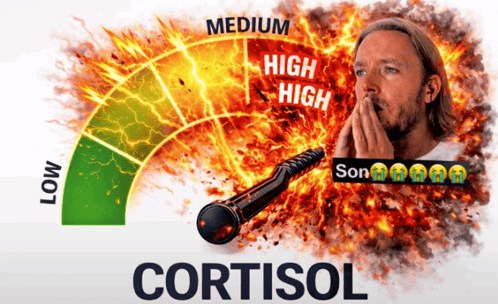
Low heart rate and relaxed blood pressure naturally correlate with lower base-line levels of systemic cortisol. Ironically, even the internet's notorious looksmaxxing circles have recently embraced this, turning cortisol into a trending meme, having realized that high levels of cortisol lead to one developing skinny legs, flabby skin and a flat butt due to the excess amount of gluconeogenesis.
By now you might be thinking that I’m "flexing" my healthy blood pressure numbers. And in a way, I am. I needed a convincing, data-backed case study to show you what is actually possible when you ditch the modern, glucose-dependent lifestyle. I don't want you to take my word for it and instead present it as hard data.
Do yourself a favor: buy an inexpensive electronic blood pressure monitor with an automatic pump. Measure your base-line resting BP. Then, measure your blood pressure again a few minutes after finishing an intense workout. Analyze, and if in doubt — find a physician and ask them questions. It has never been cheaper or easier to get an on-demand report card on your cardiovascular system. Find out where your base-line sits, step off the insulin roller-coaster, and give your heart the chance to recover that it deserves.
A Survey!
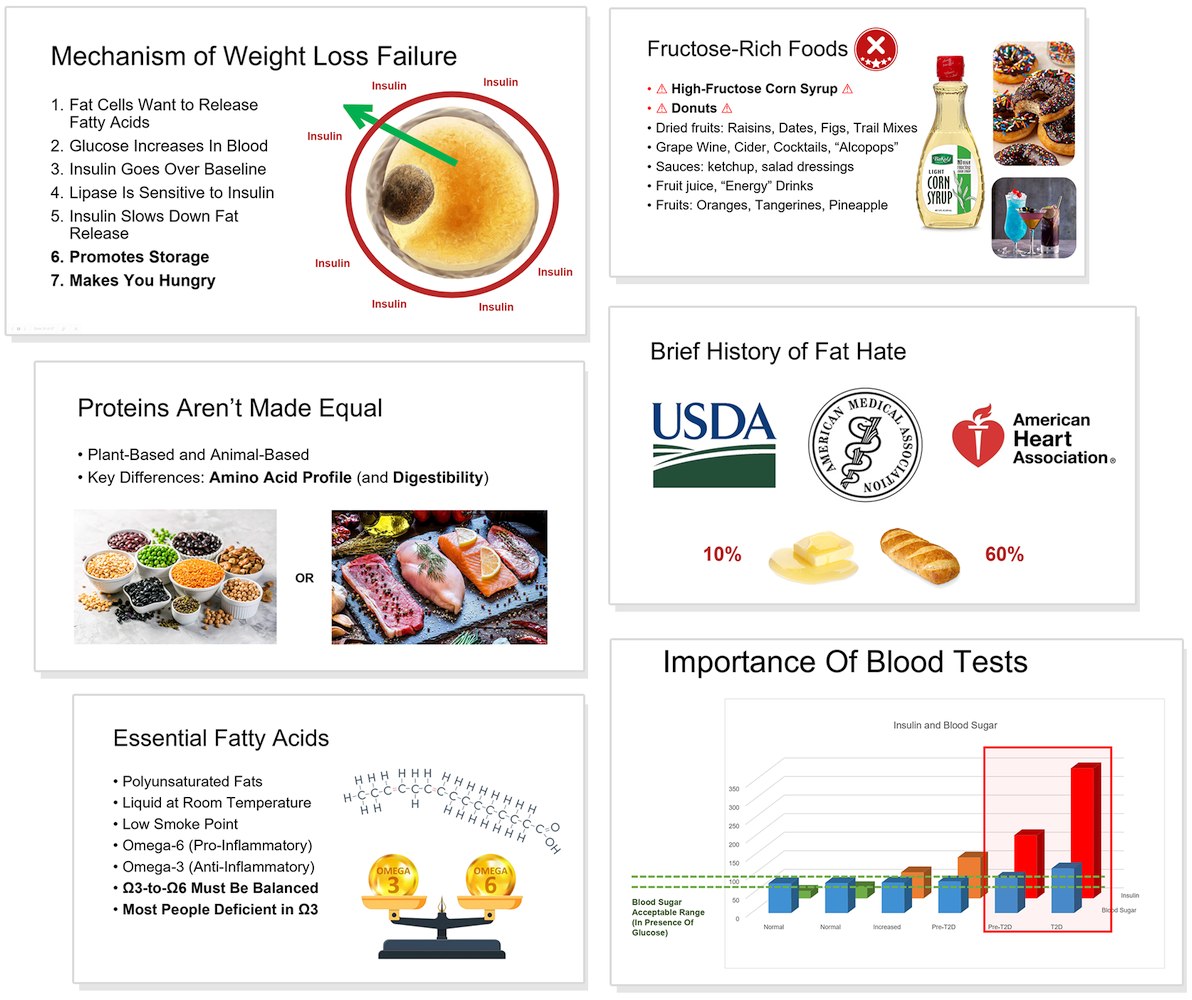
I'm currently conducting an anonymous survey to see whether there's demand for a Lifestyle Coaching Program I'm working on. If this is something you might be interested in — see this section in the original blog post on 6 years of Ring Fit Adventure, or find the short anonymous survey form below:
Thank you for reading my blog.