"Copilot Key" Remapping Soon to Be Possible Without Hacks
In the latest news, we can clearly see yet another proof of how much power Microsoft holds over hardware manufacturers.
Guess what? — Microsoft has finally admitted that Windows 11's dedicated Copilot key breaks certain workflows, and has confirmed plans to let users restore the "Right Ctrl" or "Context menu" key later this year.
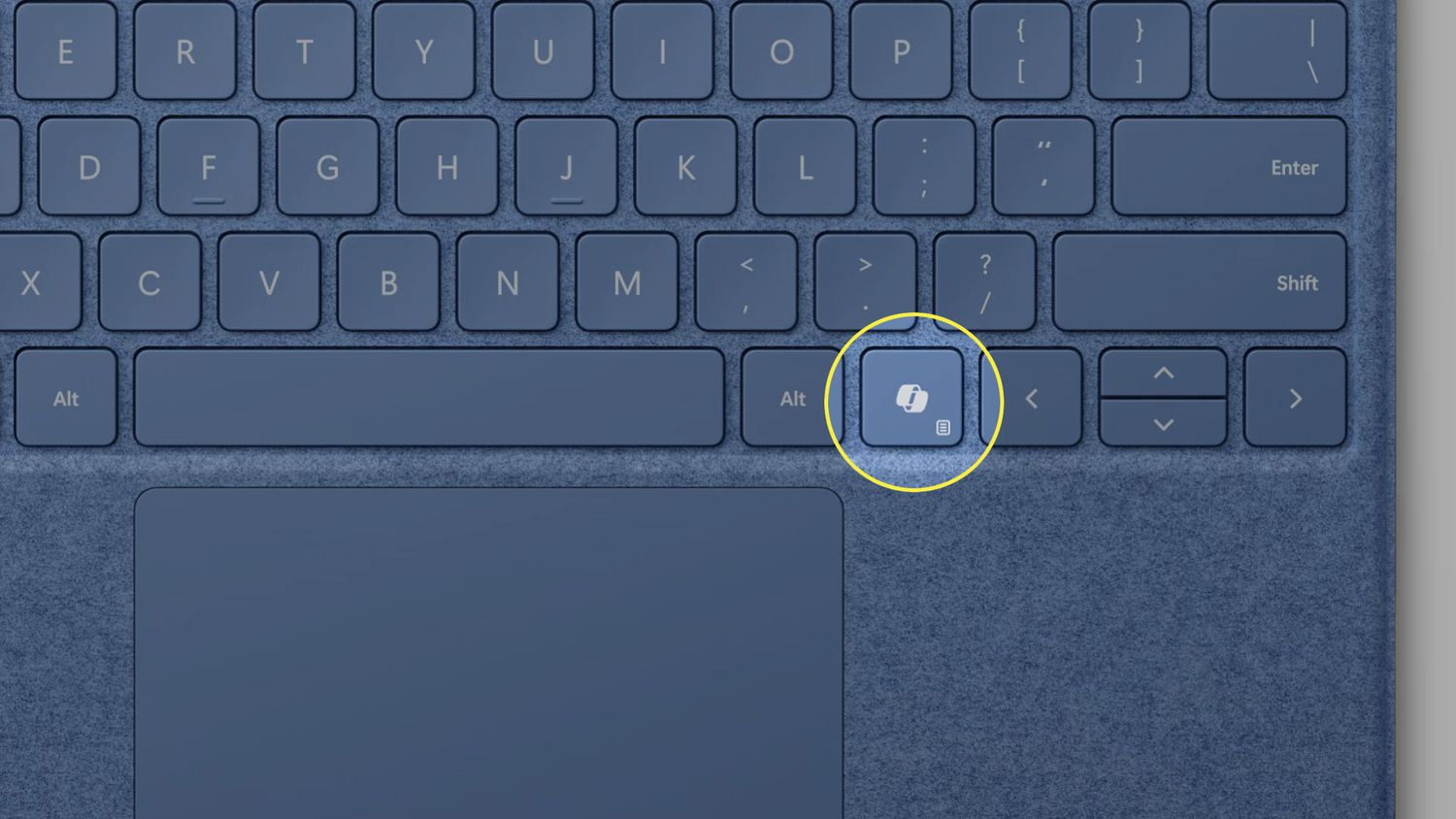
This key has been a menace for people utilizing the right Ctrl key for specialized software like VirtualBox as a "host key", for screen reader users who have relied on it for ages, or for the Linux OS crowd who found themselves stuck with a useless key on their new laptops.
Remapping it has never been a trivial task because it isn't a modifier like the original Ctrl key was. Instead, it sends a single hard-wired Left Win + Left Shift + F23 keyboard shortcut. All existing hacks to make it act as Ctrl have been extremely unreliable, often breaking out of nowhere. It seems this may soon become a thing of the past, and users will finally be able to use that key the way they want.
This event is not a celebration of "Yay, Copilot is failing!", or a sign that "Microsoft is finally changing its ways" — It's a sobering reminder that for years, not a single manufacturer of so-called "Copilot+ PCs" (basically all Windows laptops with 16+ GB of RAM) provided a way to change the behavior of that button, whether via BIOS or device-specific management software.
The fact that users had to rely on hacks because manufacturers refused to introduce a trivial firmware toggle effectively hints that this was a strict requirement for "Copilot+ PC" certification, meant to help Microsoft shamelessly promote its glorified AI slop button and force users to cope.
And the manufacturers complied.
Suffice it to say, I did my part by not buying a single laptop with a dysfunctional right Ctrl key in the mean-time. Actually, this is a nice opportunity to show off this beautiful bastard — the 2017 Lenovo ThinkPad X270 I obtained half a year ago and have been using almost exclusively to learn and practice Tcl/Tk while working on the post on the topic. Well, that, and I've always wanted a ThinkPad and needed a machine for very technical tasks like flashing firmware, jailbreaking various devices, and running bare-metal software scripts that might wreck an OS install, to avoid borking the setup on my main Lenovo 14ACN6.
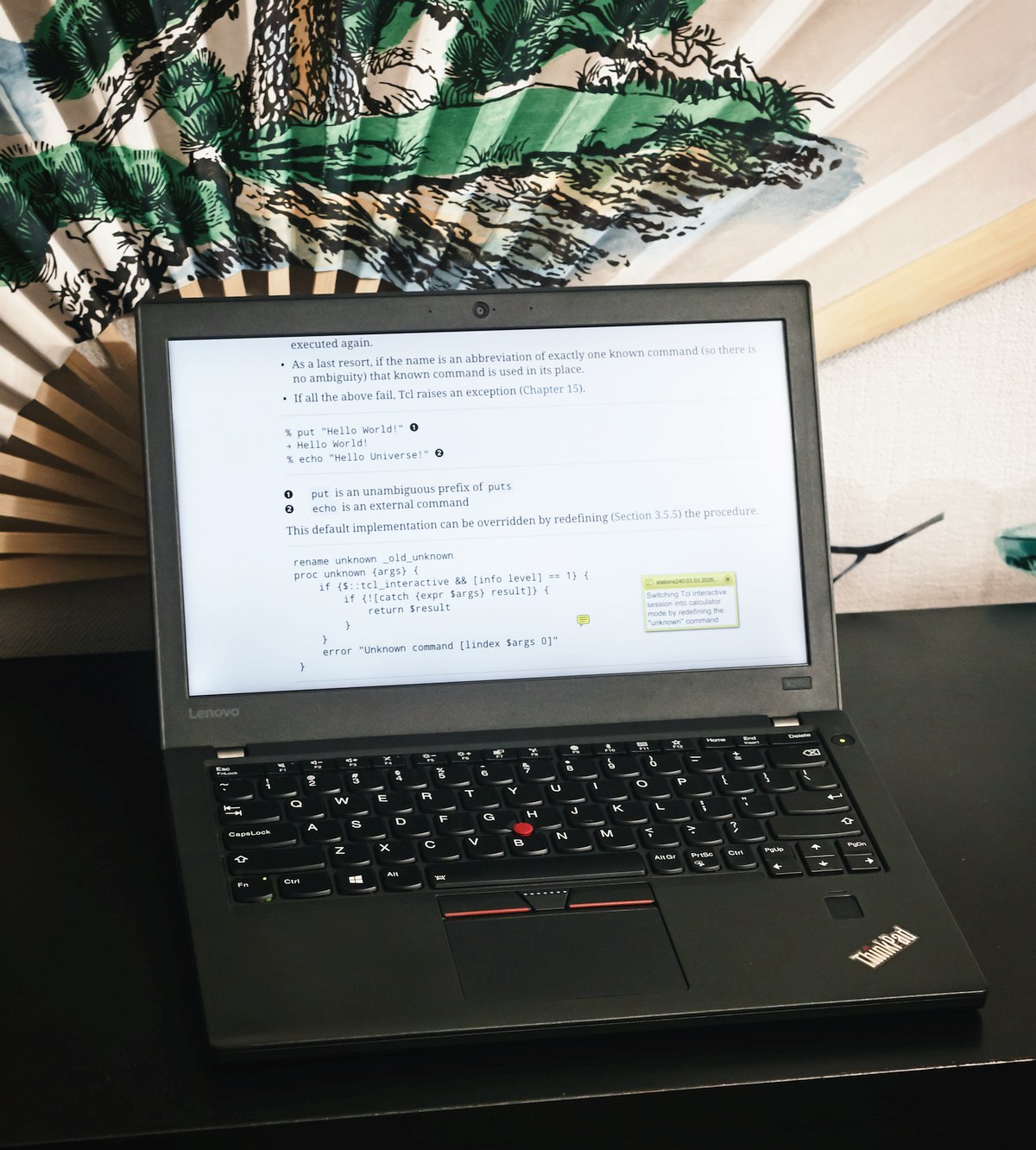
The laptop may not be fast by today's standards, but it was cheap, came with a large 48Wh battery in addition to the healthy 15Wh internal one, has 16GB of RAM, is super compact (with a 12.5'' screen), and is in great condition. So, consider buying a used laptop instead of a new one if you don't need the latest features, especially when some of those are more of an obstacle than a useful feature anyway.
And I will continue to vote with my wallet whenever some greedy corporation and its spineless manufacturing disciples decide to take away a standard piece of user utility and replace it with a useless billboard for their trendy garbage.
On Windows 10 Support EOL
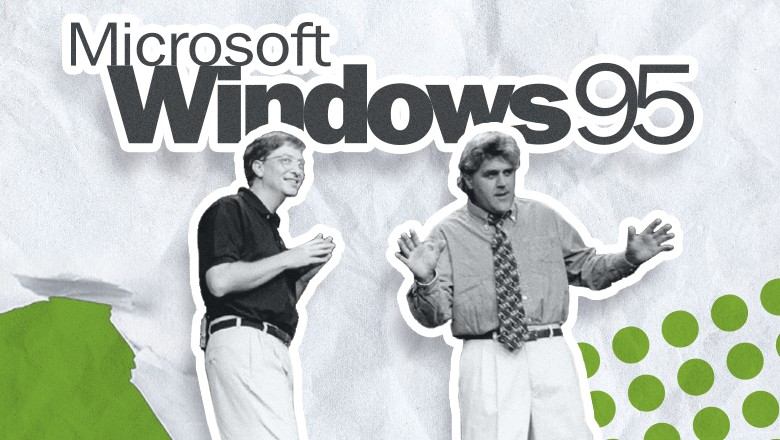
The end of support for Windows 10 updates and the aggressive push from Microsoft to force users to upgrade to Windows 11 (which is apparently "incompatible" with tons of perfectly fine computers) reminded me of a certain gem from a bygone era. I bet you've never seen it, as it was a rather obscure parody of the Rolling Stones' "Start Me Up".
“Bought It Up” was a spoof of that track, and one of several parodies and jokes spawned by Microsoft’s relentless use of the "Start Me Up" slogan during the Windows 95 launch in 1995. Windows 3.1 users who got suckered into purchasing a copy of the new OS quickly grew frustrated with its requirements and the resulting upgrade costs.
This song was later animated and shared on the forums as a Macromedia Flash (SWF) movie. Remember those? Yes, Macromedia, which Adobe gobbled up much later, in 2005. So technically this one is from the OG era of Flash. Ah, memories…
Here's the original SWF file if you need it. You can play it using Ruffle, an open source Flash Player emulator.
Just a random piece of the early internet humor culture for ya. Guess history does repeat itself, who would've known, lol.
Reality Check. What Is NVIDIA RTX Technology? What Is DirectX DXR? Here's What They Can and Cannot Do
NVIDIA and its partners, as well as AAA-developers and game engine gurus like Epic Games, keep throwing their impressive demos at us at an accelerating rate.
These feature the recently announced real-time ray tracing tool-set of Microsoft DirectX 12 as well as the (claimed) performance benefits proposed by NVIDIA's proprietary RTX technology available in their Volta GPU lineup, which in theory should give the developers new tools for achieving never before seen realism in games and real-time visual applications.
There's a demo by the Epic team I found particularly impressive:
Looking at these beautiful images one can expect NVIDIA RTX and DirectX DXR to do more than they are actually capable of. Some might even think that the time has come when we can ray trace the whole scene in real-time and say good bye to the good old rasterization.
There's an excellent article available at PC Perspective you should definitely check out if you're interested in the current state of the technology and the relationship between Microsoft DirectX Raytracing and NVIDIA RTX, which without any explanation can be quite confusing, seeing how NVIDIA heavily focuses on the native hardware-accelerated tech which RTX is, whist Microsoft stresses out that DirecX DXR is an extension of an existing DX tool-set and compatible with all of the future certified DX12-capable graphics cards (since the world of computer graphics doesn't revolve solely around NVIDIA and its products, you know).
So here I am to quickly summarize what RTX and DXR are really capable of at the moment of writing and what they are good (and not so good) for.
NVIDIA Volta + Microsoft DX12 = Real-time ray-tracing. Finally?
Whenever I hear the term "real-time ray-tracing", I immediately think of some of the earlier RTRT experiments done by Ray Tracey and OTOY Brigade. You know, those impressive, yet noisy and not quite real-time demos with mirror-only reflections and lots a lots of convolving noisy rendered frames.
Like this one:
I wouldn't dream of seeing something actually ray-traced in real-time at 30fps without any noise in the upcoming 5-10 years. Little did I know, NVIDIA and Microsoft had the same idea and put their best minds to the task.
Results? Well...
Delivered 100%.
This demo, developed by EA (believe it or not) is running on NVIDIA's newest lineup of VOLTA GPUs, which means that VOLTA is also on the way! Yay! NVIDIA RTX tech sure looks promising.
Can you imagine what will happen to offline CUDA ray-tracers following this announcement? Hopefully their devs will be able to make this amazing tech a part of the rendering pipeline ASAP. Otherwise, C'est la vie: you've been REKT by a real-time ray-tracing solution.
Just kidding. We gotta test this thing out first and only then will be able to tell whether we've been led to believe in yet another fairy tale or that you need like 8 VOLTAS to run this demo which would be a let down.