How to Play Doom and Doom II Like You Would on a Compaq LTE 5000 Series Laptop From the 1990s
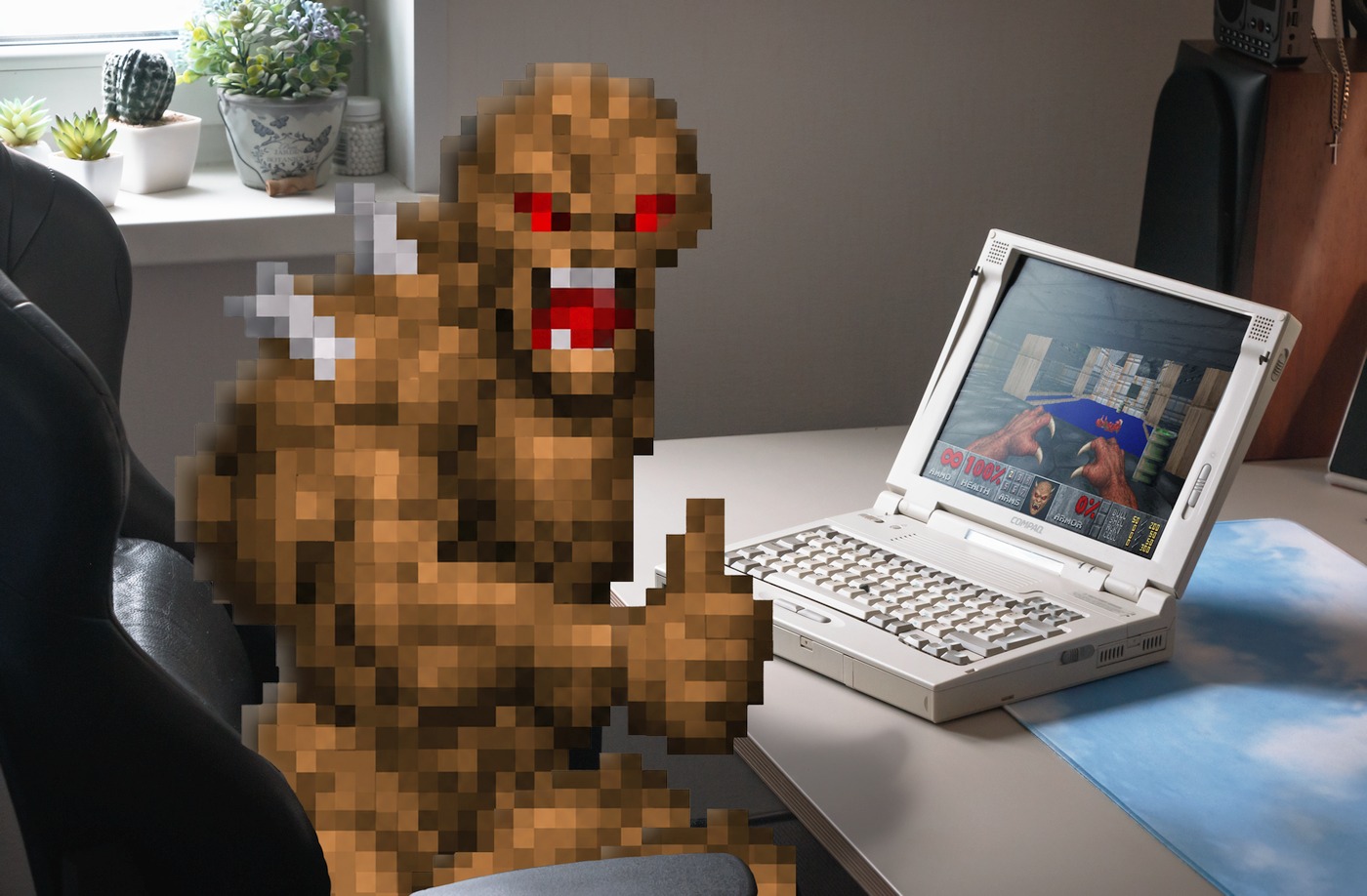
As unlikely as it sounds for a millennial, until recently, I had never actually played through either the original 1993 Doom or its 1994 sequel, Doom II: Hell on Earth.
My one real experience with Doom came way back in 2008, through a random Flash demo I stumbled across online, where Adobe was using Doom to showcase how C code could be executed inside an Adobe Flash file. It was the original shareware Doom game running at a smooth frame rate, in the browser, made possible thanks to Adobe Alchemy (also known as CrossBridge) — a short-lived C/C++ compiler for the ActionScript Virtual Machine that Adobe retired along with Flash.
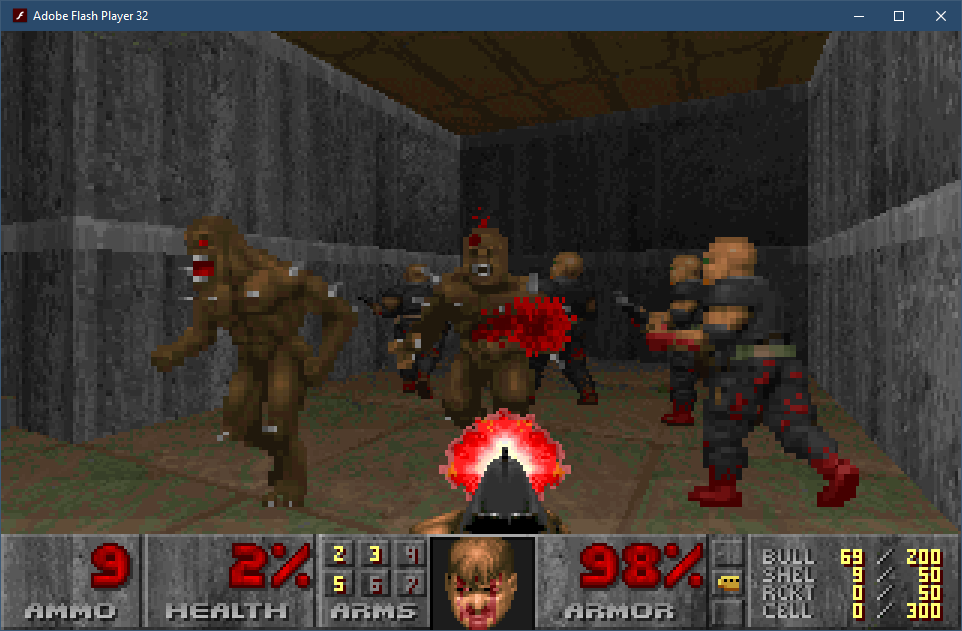
The demo had no music or mouselook, and the aspect ratio was incorrect, but I didn't care. I was too curious to see how far I could get, and eventually managed to finish the only episode available in that shareware release: "Knee-Deep in the Dead". And well, that was enough to give me the gist of what the original Doom was about, which is why I never bothered with the full retail version.
I inadvertently became the exact kind of player John Carmack had been talking about in his 1999 interview with Doomworld, where he explained why Doom II was released as a commercial game rather than as shareware like its predecessor:
"A lot of people consider themselves to have 'finished DOOM' when they just finished the shareware episode".
A Serendipitous Find
Fast-forward eighteen years to September 2026.
One day, on a sunny afternoon, I was scrolling through the classifieds when I stumbled upon a gorgeously preserved retro laptop. I had long dreamed of owning a classic "beige box" from the Windows 95/DOS era, but all the listings I had come across before were either yellowed, tired-looking desktop PCs, laptops based on 486-class processors (slow, DOS-only machines), or portable computers from the Windows 98 era — dull, worn-out dark-gray rectangles with no real charm or character.
Growing up, I never owned a Windows 95-era computer. My own experience with PC gaming began with visits to a friend's house, where his dad's PC became my gateway to Diablo, Fallout, Carmageddon, and some other classics. My first personal computer, meanwhile, was a much more modern 800 MHz Pentium III with 128 MB of RAM, designed to run Windows 98.
Seeing that retro laptop in the listing brought back memories of all the good old DOS and Win95 games I grew up playing. And it felt like the perfect opportunity to accomplish two things: acquire a marvelous vintage laptop and use it to beat the original Doom and Doom II: Hell on Earth on period-appropriate hardware.
I bought it almost immediately.
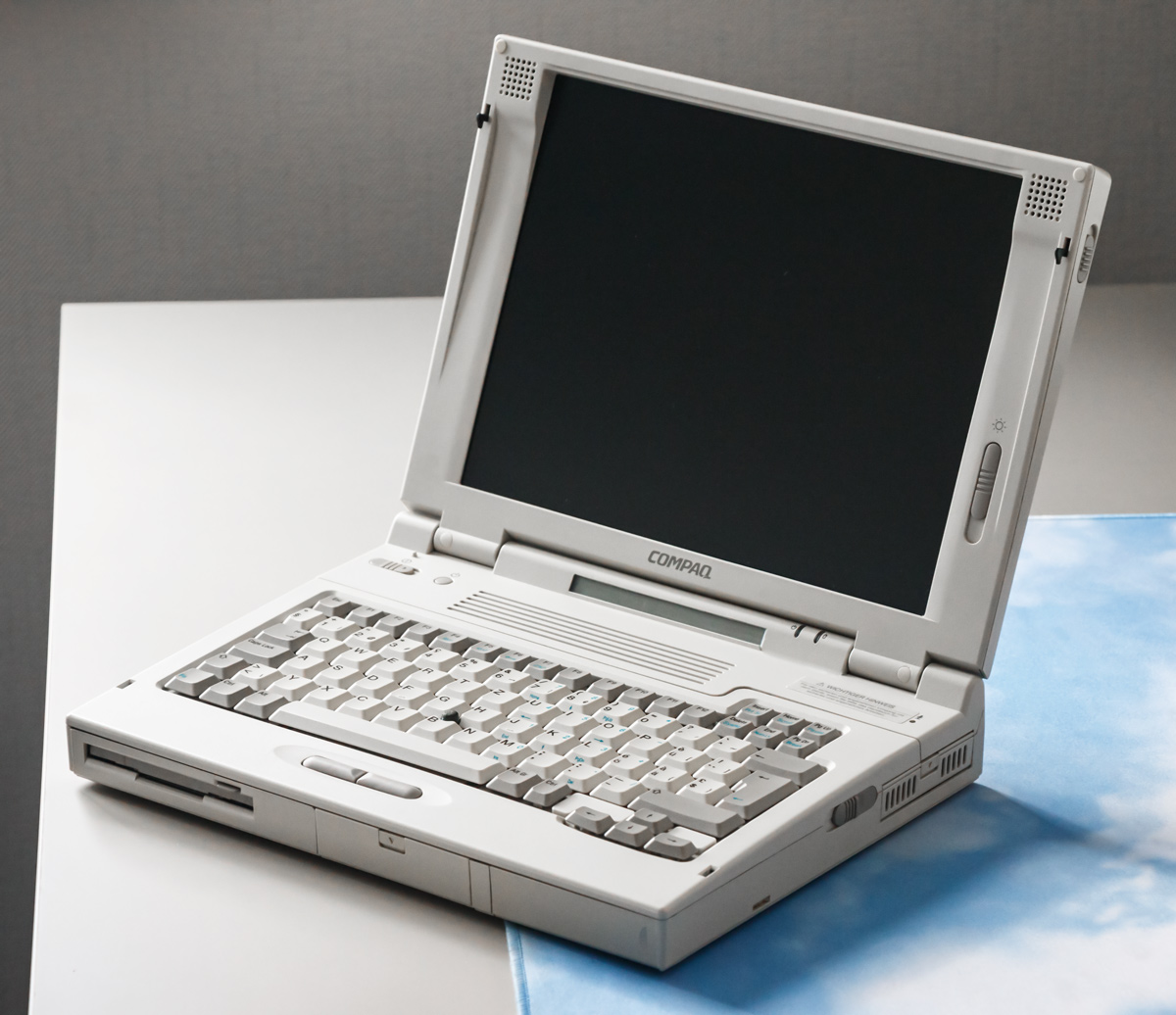
Here it is, in its full retro glory — the Compaq LTE 5400.
Get Your New Year Vibes From Ross's Game Dungeon Christmas Episodes

To go with the New Year's "wintery" vibe I want to share something unusual, in hopes you'll find it as entertaining as I did — Ross's Game Dungeon by Ross Scott.
The Man. The Legend.

I found out about Ross though his famous "Freeman's Mind" series many years ago. A series, which you should totally watch in full, BTW. Chronologically, from the very first episode. Here's the complete YouTube playlist, for your convenience.
One day, having just finished a new episode of Freeman's Mind, I noticed YouTube recommending a video from his other series, "Ross's Game Dungeon". Don't remember which one it was, but I got hooked and soon ended up watching all of them in the weeks that followed...
Hello Again, Unity. I Missed You
Some time ago I bashed Unity Game Engine (the Editor in particular) for its instability and lots of quirks and questionable changes that took place over the years following the version 4 release of the Editor.
Fast forward to this September. I'm done with my microcontroller shenanigans and have mostly finished the Design Document for the game I talked about quite a while ago (which took a lot of planning, for I am a project manager after all).
What's the next step then? — Exactly!
Prototyping!
So I've been playing with the latest "LTS" version of the Unity Editor 2021.3.7 and...
Wow!
And I mean a good wow:
- It's rock solid and hasn't crashed once even when I was importing some of my older code and extension methods from the previous game which I wrote in 2012-2015. And 95% of the code-base ended up being non-obsolete! I guess Unity APIs didn't change that much over the years, huh? How cool is that?
- Package Manager is amazing. Cutting some of the features of the engine from the binary/default assembly and turning those into officially supported packages with the added convenience of being able to download and update them as you please? What a deal!
- Unity Addressable Asset system (or "Addressables"). Nuff said. This is a feature Unity devs had been dreaming of for like a decade
- Nested prefabs. I know, I am a slowpoke, since this is not a new feature, but there is a difference: they work. Compared to my previous experience with nested prefabs in Unity when they would crash the editor like 50% of the time when I was editing them – now we're actually usable! Huzzah!
- Integration with Visual Studio is very solid, pleasure to work with
- I looks the same, feels the same and despite adding new features like DOTS and burst compiler, Unity team didn't change the paradigm too much, so being a knuckle-headed brute that I am I can continue using ScriptableObjects and MonoBehaviors for most of my objects and scripts. Yay!
- C#. Yes, C#. That C#. It's not new of course, but it's C#. It's C#, you see. It's not C or C++. It's C#. I love C#, I guess that's what I'm trying to say
- Also, Asset Store is still a thing. And can still save hundreds of hours of development for a couple hundred bucks
- Oh, yeah, it's still free of charge for indie devs. Just sayin'
All in all, the time has come...
Unleash the monkey coder!

Play Ghost of Tsushima
There are bad games...
There are... mediocre games.
There are good games.
There are great games.
And then there's Ghost of Tsushima. In a class of it's own, a pure masterpiece of visual and open-world game design.
Sucker Punch, you beautiful bastards you.
New Unity 2019 2D Sprite Rigging and Lighting Tools
With the latest 2019.1 update Unity team have seriously upgraded the 2D tool-set of the editor:
Seems like a lot of those tools were inspired by the Rayman Legends engine. Something I was drooling over 5 years ago, hoping one day Unity would implement some of those. And they finally did!
It really makes me all warm and fuzzy inside, remembering how most of those automated 2D tools and thingies were not available when I was working on Run and Rock-it Kristie in the freeware version of Unity 4 (which back then lacked even the Sprite packaging functionality!) and had to be either developed from scratch or achieved with some cool Asset Store stuff you would need to purchase and integrate into your product.

Oh, the tools... The tools...
IK and rigging with bone weighting? Check:
Manual sprite atlasing and set-up? Check (atlasing is vital for mesh batching and draw call reduction):
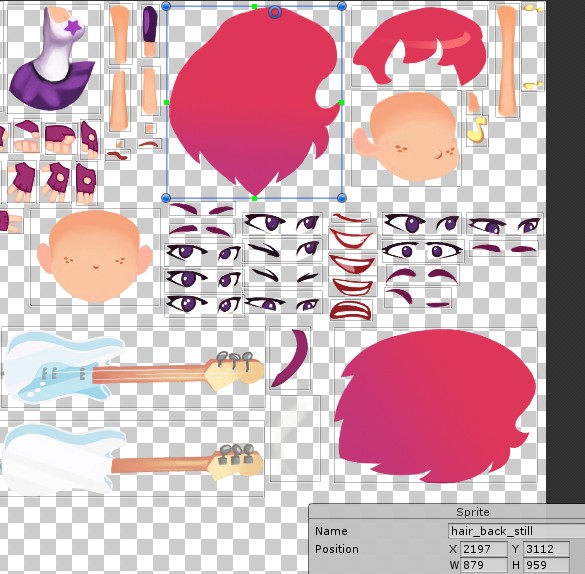
Sprite assembly and animation? Check:
Dynamic level-building tools? Check (with a modded version of the Ferr2D asset):
Dynamic lighting? Check! — With up to 4 live vertex lights and camera-distance based light culling to make sure the game would run at stable 60 fps on iPhone 4 (heavily reliant on the amazing but now deprecated Core Framework asset by echoLogin):
It was... Fun!
You know what I also remember? I remember almost every day working on the game I felt excited and driven. It was FUN. Even when it was challenging to solve some technical issues (there were a lot of those, especially for a beginner) or work around Unity limitations or bugs, it felt truly rewarding and would give such a powerful motivation boost that I would continue working until the end.
Until the release.

But the "serious" CG movie stuff I'm doing now?.. Honestly? Meh. It's so slow and clunky compared to my previous game development experience. Everything needs to be either cached, or rendered... I'm also having some grave issues with hair simulation which I wasn't able to overcome for the last 6+ months, many operations in the "classic" world of 3D editors are still either single-threaded, unstable, or require some very specific knowledge or particular and elaborate set-up... It's almost no fun! No fun means much, much less motivation to continue.
It's a problem.

Therefore this July I will instead be checking out the latest Unity Engine and see whether most of what I'm doing right now could be ported into Unity. Starting with simulation and scene assembly and hopefully — ending up animating, rendering and applying post effects right within the Unity Editor where everything is real-time and fun! I miss the real-time aspect! Oh boy, do I miss the ability to tweak materials and see the more or less finalized render of the scene even during assembly. The ability to import assets and build "smart" prefabs (like Softimage Models, but with interactivity and intrinsic scene-aware scripting via MonoBehavior) e.t.c...
I miss you, Unity!
Run and Rock-it Kristie On the App Store: Last Chance
Last chance: grab your free full copy of action-packed Run and Rock-it Kristie on the App Store since the game will be leaving the store in two weeks.

Developing the game was a blast, watching people and journalists play and discuss it on the internet — priceless.
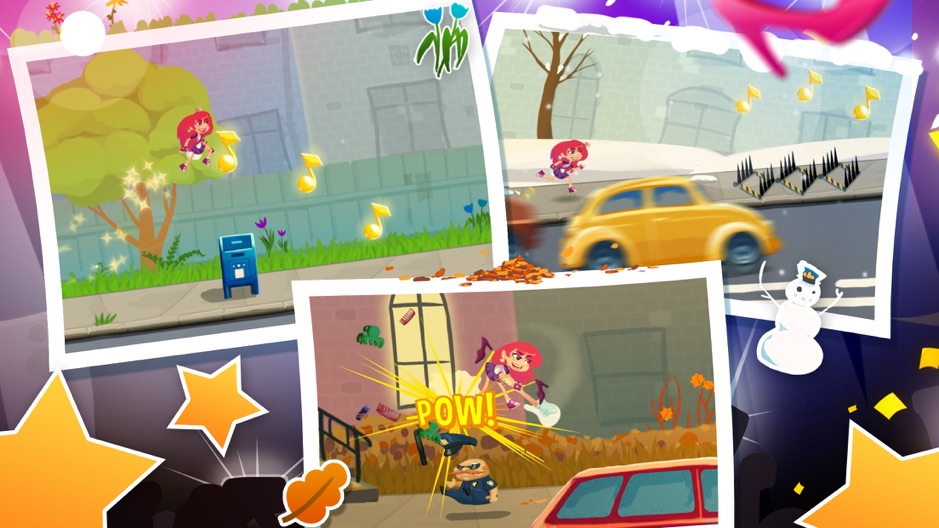
The fact that Apple actually featured it on the EU App Store main page for two weeks was simply unbelievable.

Thank you all for playing!