EA Games FIFA 19. A Failed Paid Reviews Extravaganza and Why You Should Never Trust Popular Game and Entertainment Media
This is a very quick post about modern PR practices and how every single medium-to-large-scale video game and entertainment media website cannot be trusted never-ever-never. Ever.
Disclaimer: I don't play sports games, especially soccer games. I just don't care about football. This post is exclusively about dirty PR practices employed by commercial companies and the PR agencies they work with.
The Case
On September 25th, EA Games released a new title in their well-known sports game series named "FIFA 19". I won't get into the details of what a controversial product it ended up being. If you're interested, please refer to the following videos by YongYea: one, two, three.
I'm here to talk about how the game scored at one of the better-known review sites out there — Metacritic.
Here's the FIFA 19 for PS4 page at Metacritic in its current state (Oct 5th):
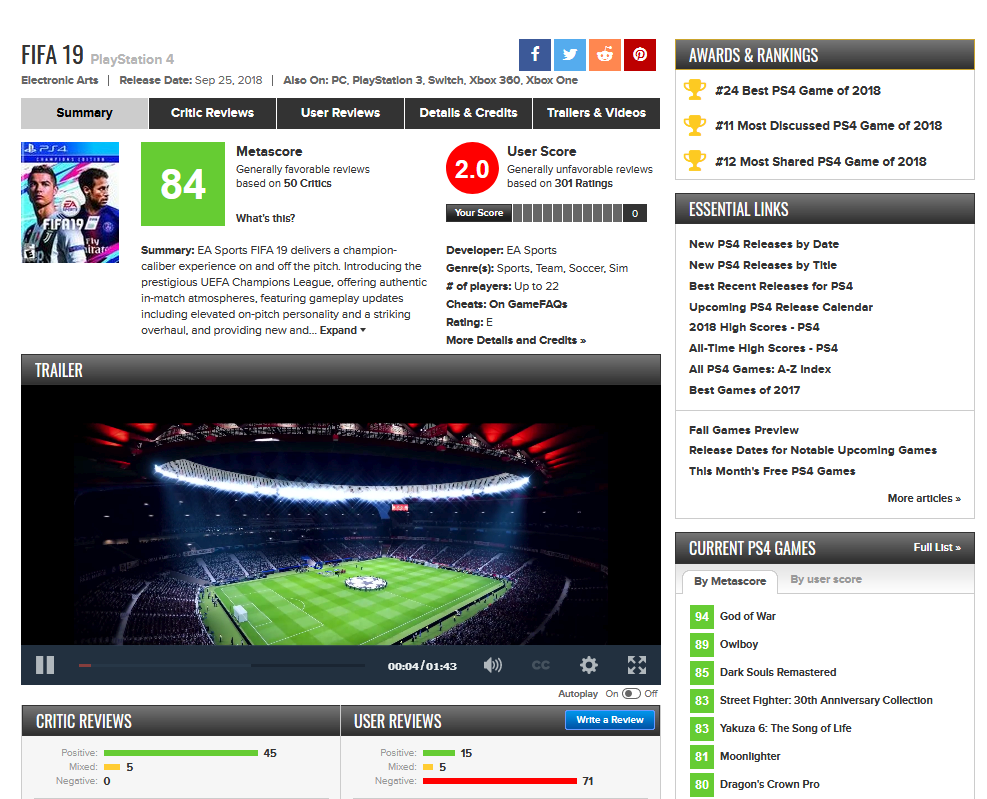
Ports of the game for PC, XBox 360 and other platforms do not fare much better, and don't differ that much, so I'll just focus on the platform with the most reviews and critic scores — PS4.
Note the sharp disparity between "Critic" and "User" scores for the product.
EA is a big commercial entity, and its CEO knows the company needs to maintain good sales of its products. The most common way to do so when it comes to review websites and social networks has always been... paid reviews. It's no shock to anyone: everyone is aware that at least 15-30% of all reviews on the internet should be taken with a grain of salt, so to speak.
The Reviews
As a web project manager working for a public commercial company, I have an understanding of how to approach paid reviews — how to create new virtual users and make the best use of those accounts as well as existing ones.
And I can definitely tell you this is not how you do it.