High-Quality Cloth Simulation With Nvidia Physx Flex (Also Softimage Ice)
This is the first post demonstrating what NVIDIA PhysX FleX is capable of when it comes to high-quality simulations. I'm planning to show how it can be used for all kinds of simulations with the upcoming blog posts. Also a cool demonstration video below.
What Is FleX?

FleX is a particle based simulation framework developed by NVIDIA for real-time visual effects. The idea is the following: instead of having a bunch of solvers for each type of a body (rigid, soft, fluid, cloth etc.) why not create a unified solver based on the concept of using particles (or "molecules" if you prefer) to represent the bodies? Then, make this solver work on modern GPUs to deliver unprecedented simulation speed and you can actually use the result for real-time simulations in games or interactive presentations.
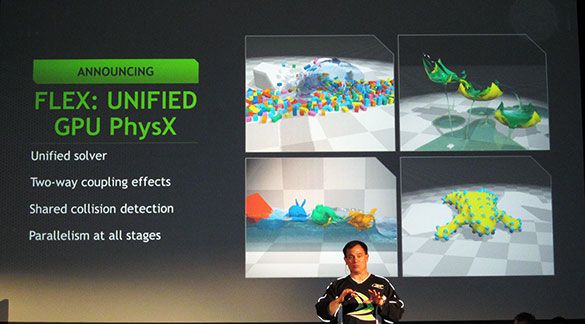
Now, we all know what "real-time performance" means when it comes to the "offline" CGI — we all know the drill! ;)
Using Cloth Simulation and Delta Mush Deformer for Skin Collision in Animation
I'd like to present the results of a study I conducted recently:
Story
Working on my animated short film, I'm constantly updating a to-do list to get a decent final result. Recently, one particular topic has been keeping me up at night — I just remembered that to correct skinning errors on animated characters you either have to sculpt a bunch of blend shapes, write scripts for them, or rely on a muscle system built into your DCC package.
I then turned to Maya, which has had a muscle system for ages.
Maya Muscle System
Maya provides several deformers for managing soft- and hard-tissue interactions, including smart-, self- and multi-object collisions. Even though they're not exactly high-performance, they get the job done.
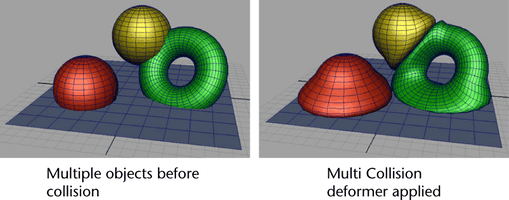
Unfortunately, using any of Maya's Muscle System tools would tie me to a $185/month subscription for the whole duration of the project, which would be outrageous. There is a lite version of Maya available for indie game devs — Maya LT — which only costs $30 a month, but it doesn't come with the Muscle System.

So I had to improvise and develop a simple, straightforward solution to this problem in a DCC of my choice.